

For most beginners, the best first camera lens is a versatile standard zoom—often the kit lens that came with the camera. It lets you photograph everything from travel scenes to family portraits while discovering which focal lengths you actually use. If you already own a kit zoom and want more low-light flexibility or softer backgrounds, a compatible 35mm or 50mm f/1.8 prime may be a sensible second lens. The right choice depends on your camera's sensor size, lens mount, budget and favorite subjects.
Start With the Kit Zoom If You Already Own One
Kit lenses are often dismissed because many have modest maximum apertures and lightweight construction. Neither makes them a bad place to begin. A common APS-C kit zoom covers about 16–50mm or 18–55mm; full-frame kits may include ranges such as 24–50mm or 28–70mm. Exact options vary by camera system.
A standard zoom teaches you something a fixed-focal-length lens cannot: which framing choices suit your everyday photographs. At the wide end, you can include a room, a street or a landscape. At the longer end, you can frame a person or detail more tightly without changing lenses.
Keep the kit zoom until you can identify a specific limitation. Perhaps you often run out of room indoors, need a faster shutter speed in dim light, or cannot frame a distant subject tightly enough. Those are useful reasons to consider another lens. General claims that kit lenses are not sharp enough are not.
Is a 35mm or 50mm Prime Better for a Beginner?
A prime lens has a fixed focal length: it does not zoom. Common models with maximum apertures around f/1.8 or f/2 can allow more light in than a basic variable-aperture kit zoom and make shallow depth of field easier to achieve. However, not every prime is inexpensive, small or sharper than every zoom.
On a full-frame camera, a 35mm prime is a flexible choice for travel, street scenes, family gatherings and portraits that include the surroundings. A 50mm prime gives a tighter view that works well for individual portraits, details and everyday subjects when you have space to step back.
On an APS-C camera, a lens around 23–35mm is often a more convenient everyday prime. A 50mm can be excellent for portraits, but it may feel too tight for a small room. For Micro Four Thirds, a 25mm lens provides roughly the field of view of a 50mm lens on full frame.
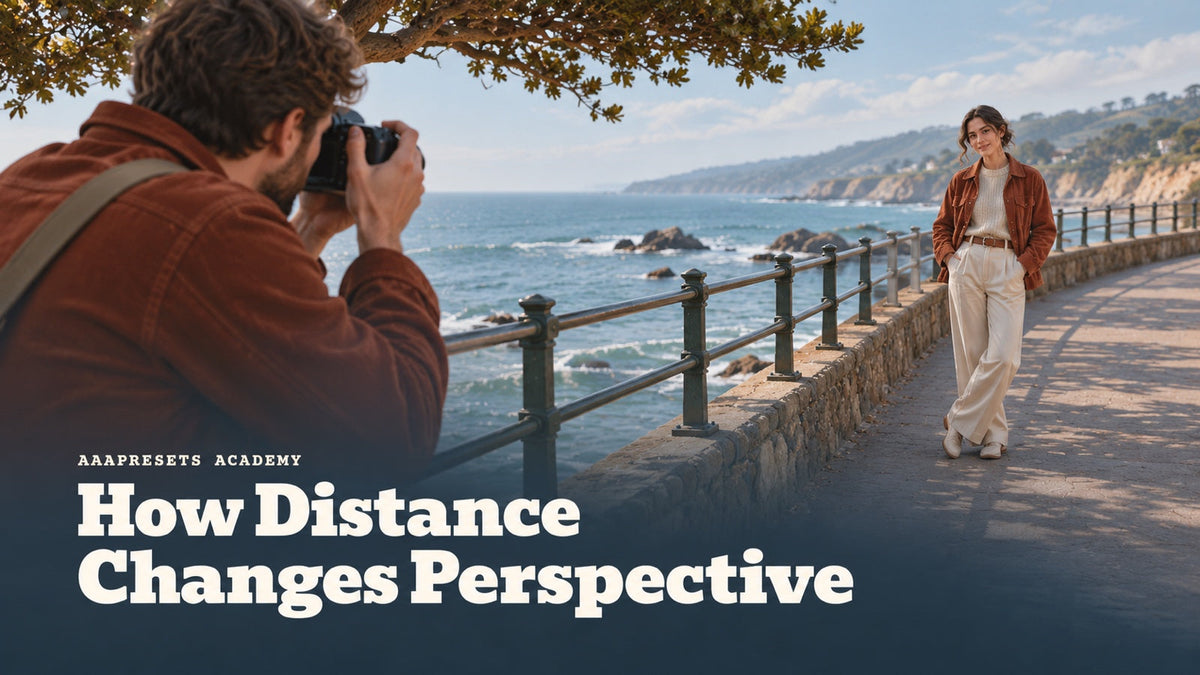
Moving closer or farther away with a prime is not exactly the same as zooming: changing camera position also changes perspective. When space is limited, a zoom can be more practical than a prime even if the prime offers a wider aperture.
Check Sensor Size Before Choosing a Focal Length
The millimeter number printed on a lens does not change when you attach it to a different camera. What changes with sensor format is the angle of view recorded in the image. Most APS-C cameras use a crop factor near 1.5×, while Canon APS-C cameras commonly use about 1.6×. Micro Four Thirds uses approximately 2×.
- 50mm on full frame: a standard, moderately tight view.
- 35mm on 1.5× APS-C: roughly the same field of view as 52.5mm on full frame.
- 50mm on 1.5× APS-C: a field of view comparable to 75mm on full frame—often better suited to portraits than cramped interiors.
- 25mm on Micro Four Thirds: a field of view comparable to 50mm on full frame.
These are framing comparisons, not changes to the lens's physical focal length. For further explanation, see our full-frame vs APS-C guide and Sony's guide to lens basics and sensor formats.
How Much Does Aperture Matter for a First Lens?
Aperture is expressed as an f-number. A smaller number, such as f/1.8, represents a wider maximum opening than f/5.6. At the same shutter speed and ISO, a wider aperture lets more light reach the sensor. This can help you photograph people indoors without slowing the shutter as much, or keep ISO lower when the scene allows it. Our guide to f-stops explains these numbers in more detail.
A wider aperture also tends to reduce depth of field, which can soften the background behind a sharply focused subject. Our guide to bokeh explains how out-of-focus areas appear. But f/1.8 is not automatically the best setting for every photograph. A group photo may need f/4 or f/5.6 to keep several faces sharp, depending on their arrangement, and a fast-moving child still needs an appropriate shutter speed and reliable focus.
Read the entire aperture marking on a zoom lens. For example, an 18–55mm f/3.5–5.6 lens has a maximum aperture that becomes narrower toward the long end. A lens marked 24–70mm f/2.8 generally maintains an f/2.8 maximum aperture throughout its zoom range.
Choose the Lens Type That Matches What You Photograph
- Travel, everyday life and family: start with a standard zoom for flexibility. A moderately wide prime can follow if you regularly shoot indoors or prefer traveling light.
- Portraits: a 50mm prime on APS-C or a 50–85mm lens on full frame can be useful, depending on framing and available space. Wider lenses work well for environmental portraits.
- Landscapes and architecture: the wide end of a kit zoom is a good starting point. Consider an ultra-wide lens if you repeatedly cannot fit the scene into the frame.
- Sports and wildlife: a telephoto zoom may actually be the right first purchase if distant action is your main subject. Check reach, autofocus, weight and stabilization rather than dismissing it as too specialized.
- Flowers, insects and small products: check minimum focusing distance and magnification. A dedicated macro lens makes sense when true close-up detail is the goal.
There is no universal rule that beginners must stay between 24mm and 85mm. A specialized lens is only a poor first choice when it does not serve the photographs you want to make.
Five Things to Check Before Buying Any Lens
- Lens mount: confirm the exact mount used by your camera. A lens made for another brand or mount generally will not attach directly, and adapters can have limitations.
- Sensor coverage: check whether the lens is designed for full frame, APS-C or Micro Four Thirds. Some crop-format lenses on full-frame cameras require crop mode or produce dark corners. Compatibility is model-specific; Sony provides an example in its E-mount lens compatibility guidance.
- Focal length and aperture: choose the field of view and available light-gathering ability your subjects require, not simply the largest numbers or lowest f-number advertised.
- Practical features: consider autofocus performance, optical stabilization when relevant, minimum focus distance, size and weight. In-body stabilization can reduce the need for a stabilized lens, but neither system freezes a moving subject.
- Total cost and condition: compare new, refurbished and used options. With a used lens, inspect for haze, fungus, significant damage and mechanical problems; test focusing and the controls, and understand the seller's return policy.
Try This Simple Test Before Buying a Second Lens
If you have a standard zoom, spend a few outings photographing the subjects you genuinely enjoy rather than shopping by specification alone.
- Photograph a familiar subject at the wide, middle and long ends of your zoom from the same camera position. Compare how much of the scene fits in each frame.
- Then change your position to create the composition you want. Notice where you cannot step back, move closer or photograph safely from another location.
- Repeat indoors and outdoors. Review which photographs needed a faster shutter speed, greater reach, a wider view or closer focusing.
- Check the focal lengths recorded in your photo information, but interpret them alongside the situations you faced. The most-used focal length is a clue, not an automatic purchase recommendation.
Use the limitation you encounter most often to choose your next lens. If your kit zoom works for the images you make, keeping it is a perfectly reasonable decision.
Remember What a New Lens—and Editing—Cannot Fix
A fast, expensive lens cannot guarantee accurate focus, stop subject movement at an unsuitable shutter speed or replace thoughtful composition. A longer focal length does not change perspective by itself; camera position determines perspective, while focal length changes framing from that position.
After the photograph is captured, Lightroom editing and creative presets can refine color, white balance, highlights and shadows. The same preset may look different across cameras, lighting conditions and RAW or JPEG files, so individual adjustments still matter. Neither a preset nor a lens upgrade can reliably restore detail that was never recorded in focus.
The bottom line: use your existing kit zoom to learn what you enjoy. If you do not have a lens yet, choose a compatible standard zoom for flexibility or an appropriately framed fast prime for a more specific goal. Buy a specialized lens when your photography—not an online gear list—gives you a clear reason.
Written by Asanka — creator of AAAPresets.


Leave a comment
This site is protected by hCaptcha and the hCaptcha Privacy Policy and Terms of Service apply.