

You do not need paid clients to build a photography portfolio that shows what you can do. What you need is relevant evidence: photographs that demonstrate the type of assignments you want, consistent technical quality, a recognizable visual direction and enough variation to show that you can repeat that quality across more than one strong frame.
The most effective approach is to treat your first portfolio as a series of self-assigned client briefs. Decide what you want to be hired to photograph, identify what a potential client would need to see before trusting you with that work, and create projects specifically to fill those gaps.
This guide explains how to build that portfolio with personal projects, friends, TFP collaborations and inexpensive test shoots without making the work look random or presenting unpaid projects as paid commissions.
Start With the Work You Want to Be Hired For
Before arranging a shoot, decide what the portfolio is supposed to sell. A portfolio for restaurant photography should prove different skills from one aimed at fashion brands, family clients or corporate headshots.
If you are still trying to define that direction, it is worth narrowing your photography niche before building one gallery that tries to represent everything you enjoy photographing.
Write a simple statement such as:
I want to photograph natural lifestyle portraits for small clothing and personal-care brands.
Now use that statement as a filter. A technically excellent landscape photograph might still be irrelevant if the work you want to book is lifestyle branding.
Build a Portfolio Proof Matrix Before You Shoot
Instead of asking, “What would be fun to photograph?”, ask, “What would a client need to see before hiring me?” This turns portfolio building into a more deliberate process.
For example:
- Portrait photographer: close portrait, environmental portrait, different expressions, full-length composition, indoor light and outdoor light.
- Product photographer: clean hero image, detail image, reflective or textured surface, styled scene and an image with useful negative space for advertising copy.
- Food photographer: finished dish, overhead composition, close detail, ingredient or preparation image and a wider table scene.
- Brand photographer: founder portrait, working or process image, product detail, environmental photograph, horizontal website image and vertical social-media composition.
You do not have to create every possible photograph. The point is to identify the evidence your target client is likely to need and then build projects that provide it.
Create Self-Assigned Projects Like Real Client Briefs
A personal project becomes more useful for a professional portfolio when it has constraints. Give yourself a brief instead of simply walking outside and hoping to find portfolio images.
- Define the objective. Write one sentence describing what the shoot is supposed to communicate.
- Define the deliverables. Decide which wide, medium, close, horizontal and vertical photographs you need.
- Choose the subject and location deliberately. They should support the type of work you want to advertise.
- Plan the visual direction. Decide on lighting, wardrobe, surfaces, props, backgrounds and a general color direction before the shoot.
- Shoot a complete mini-gallery. Try to create several complementary photographs rather than concentrating entirely on one hero image.
- Review the result against the brief. Identify what is still missing before planning the next project.
A small set of focused projects can make your gaps easier to evaluate than dozens of unrelated photographs because you can review planning, shooting, editing and sequencing as one workflow.
Use Friends and TFP Collaborations Strategically
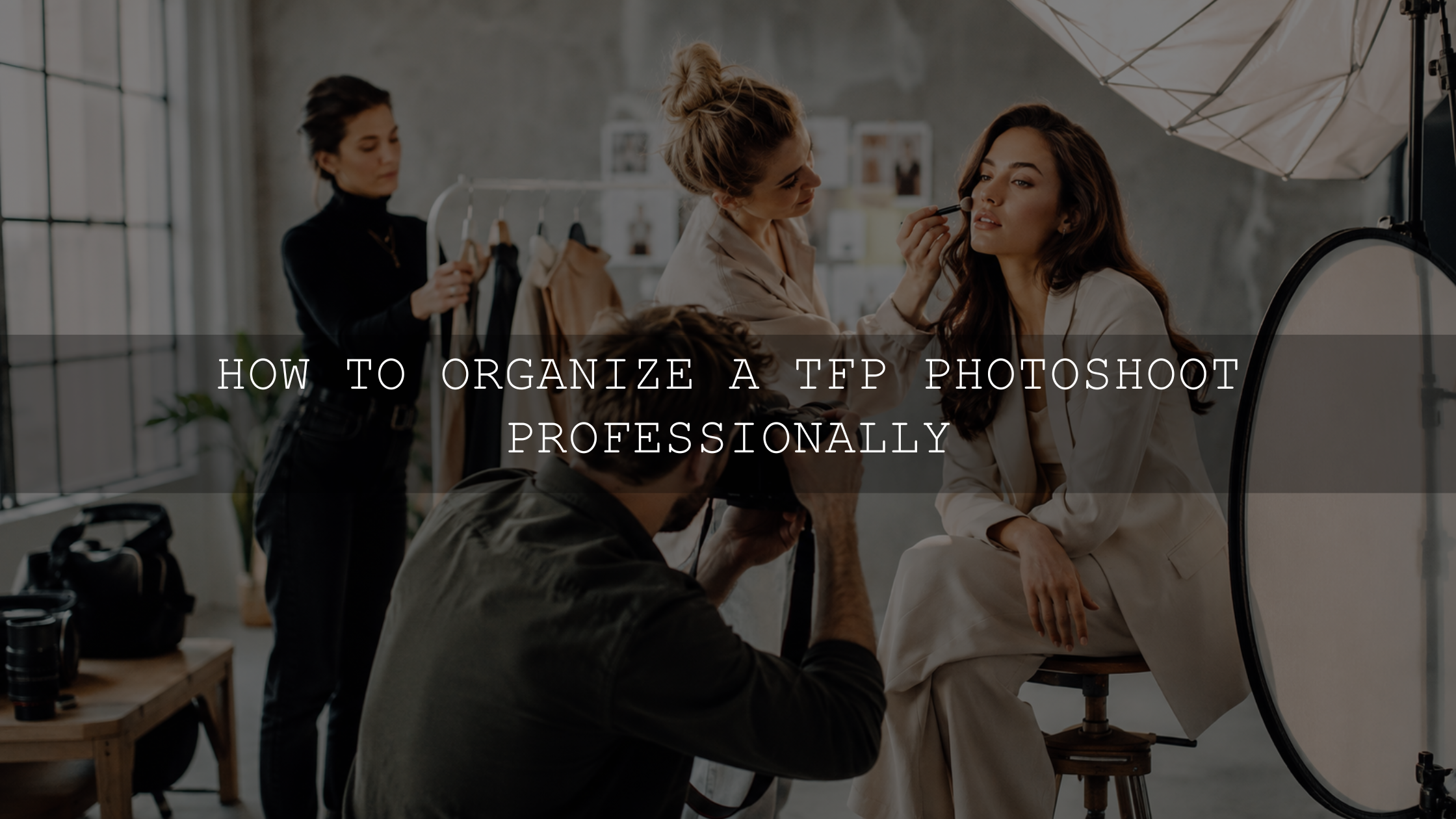
If your portfolio needs people, you can begin with friends, relatives or collaborators rather than waiting for a paid portrait assignment. TFP is commonly used to describe collaborative shoots in which participants exchange time or creative services for agreed photographs rather than a standard paid booking.
The important part is to make the collaboration specific. Do not approach someone with only, “Do you want to shoot sometime?” Prepare a short concept, examples of the intended visual direction and a realistic description of what each person is expected to contribute.
Before the shoot, clarify in writing:
- The concept and intended use of the photographs.
- The date, approximate duration and location.
- Who is responsible for wardrobe, makeup, props or other expenses.
- What edited photographs will be delivered.
- An achievable delivery timeframe.
- How the photographer and collaborators may use the finished images.
- Whether credit is expected when images are published.
- What happens if someone needs to cancel.
Permissions and release requirements depend on how and where photographs will be used, so do not treat a casual message as a universal substitute for appropriate documentation. For example, Adobe Stock has specific model-release requirements for recognizable people submitted to its marketplace. Your own legal requirements can differ by jurisdiction and intended use.
TFP should also have a purpose. Once a collaboration has supplied the type of work your portfolio was missing, you do not need to continue accepting every unpaid shoot simply because you are still building experience.
Create Commercial-Looking Product Work Without a Client
If you want product, food or e-commerce work, you already have potential subjects around you. A bottle, pair of shoes, watch, cosmetic container, coffee package or piece of kitchenware can become the basis of a self-assigned commercial brief.
Start simply. A window can provide a large light source, while white or black boards can be used to bounce or subtract light. Paper, fabric, wood, glass and other inexpensive surfaces can create different environments without requiring a studio.
More importantly, create the type of images a real brand might need. For a product shoot, that could include a clean descriptive image, a close detail, a styled lifestyle frame and a horizontal composition with enough uncluttered space for web or advertising use.
A self-assigned product photograph should not imply that the manufacturer commissioned you. Present it as a personal project, test shoot or concept study unless you have permission to describe the company as a client.
Choose Locations for the Portfolio, Not Just for the Background
A free location is useful only when it supports the story you are trying to tell. A dramatic wall may look interesting but still be wrong for a soft lifestyle brand. Similarly, a fashionable café may not be useful if the location is too crowded to produce a consistent set.
When scouting, evaluate:
- The direction and quality of available light.
- Background clutter and distracting colors.
- How the location fits your intended client or subject.
- Whether you can create wide, medium and close compositions.
- Accessibility, safety and any photography restrictions or permissions.
- How the location may change at a different time of day.
Save reference photos and note the approximate shooting direction so you are not making every decision after your subject arrives.
Edit for Consistency, Not Identical Settings
A cohesive portfolio does not require every photograph to have exactly the same white balance, contrast or color settings. Different cameras, locations and lighting conditions can respond differently to the same edit.
Begin by correcting obvious exposure and white-balance problems, then work toward a consistent visual direction across related photographs. Compare images side by side rather than judging each photograph in isolation.
Presets can provide a repeatable starting point, but the result should still be adjusted for the individual photograph. Exposure, white balance, skin tone, highlights, shadows and local adjustments may need refinement after the initial look is applied. Adobe's current Lightroom preset documentation explains how presets are applied and managed in Lightroom desktop.
A practical approach is to edit photographs in groups with similar lighting. Establish the direction on one representative frame, apply a related starting point to the group, and then correct each image where necessary. This avoids assuming that one unchanged set of adjustments will suit daylight, mixed indoor light and backlit photographs equally well.
For a deeper workflow, see how to create a consistent editing style for your portfolio.
If you want to explore several visual directions while developing that style, AAAPresets also has a Lightroom presets for mobile and desktop collection. Treat any preset as an editable starting point rather than a replacement for image-specific correction. Eligible products can also be combined through the Buy 3, Get 9 FREE offer by adding 12 eligible items to the cart and paying for 3.
Curate for Relevance, Repeatability and Contribution
The hardest part of building a portfolio is often deciding what not to show. A photograph can be personally meaningful and still weaken a client-facing portfolio.
Evaluate every candidate using three questions:
- Relevance: Does this image resemble the type of work I want someone to hire me for?
- Repeatability: Is this quality supported by other images, or does it look like an isolated result?
- Contribution: Does this photograph prove something new, or is there already a stronger image performing the same role?
Remove near-duplicates, technical misses and images that pull the portfolio in an unrelated visual direction. When two photographs make almost the same point, keep the stronger one.
Lightroom Classic includes flags, star ratings and color labels that can help organize a multi-pass selection process. Adobe documents the current flag, rating and label workflow.
Review Projects as Galleries, Not Individual Hero Images
A future client may need more than proof that you can produce one excellent photograph. They may be evaluating whether you can maintain quality across an entire assignment.
Open each test project as a group and look for:
- Consistent exposure and color treatment.
- A useful mixture of wide, medium and detail frames.
- Enough variation without unnecessary repetition.
- Reliable focus and technical quality.
- Consistent treatment of skin tones or important product colors.
- Images that work together when viewed in sequence.
If one project contains a strong hero photograph surrounded by weak supporting frames, that identifies a useful skill gap for the next shoot.
Present Self-Assigned Work Honestly
There is nothing wrong with a portfolio containing personal projects or collaborative tests. The problem begins when the presentation implies a commercial relationship that did not exist.
Useful labels include “Personal Project,” “Test Shoot,” “Self-Assigned Concept” or “TFP Collaboration.” For a more detailed project page, you can briefly explain the objective, your role, the constraints and what you created.
This context can make an early portfolio more informative because it shows how you approached the project instead of leaving the viewer to guess what happened behind the final photographs.
Know When to Stop Shooting for Free
“I still need portfolio work” can easily become an indefinite reason to avoid charging. Give unpaid projects a stopping condition.
You are moving beyond the initial portfolio-building stage when you can:
- Show relevant examples for the service you want to sell.
- Produce several strong photographs from one planned session.
- Handle the workflow from planning through final delivery consistently.
- Explain what you offer and who it is for.
- Identify the remaining gaps in your portfolio instead of simply believing you need “more photos.”
You may still create personal or collaborative work after you begin charging. The difference is that each unpaid project should have a clear creative, strategic or relationship value rather than existing only because you are afraid your portfolio is not big enough.
Prepare the Final Portfolio for Real Viewers
Once the selection is strong, review the portfolio as a visitor would see it. Start with one of your strongest and most representative images, avoid clusters of near-duplicates, introduce enough range to maintain interest and finish confidently.
If you work in several unrelated genres, separate them into clearly labeled galleries instead of forcing portraits, food, landscapes and products into one long sequence.
Before uploading finished files, check dimensions, compression, sharpening, color and presentation using a consistent workflow. The AAAPresets guide to preparing edited photos for a portfolio website covers that later stage in more detail.
Photography Portfolio Without Clients Checklist
- Define the photography work you want to book.
- Identify the photographs a prospective client would need to see.
- Plan self-assigned projects around those proof gaps.
- Use friends or TFP collaborators where appropriate.
- Clarify deliverables, permissions and expectations before collaborations.
- Create complete mini-galleries rather than isolated hero images.
- Edit related photographs toward a consistent visual direction.
- Remove repetitive, technically weak or irrelevant images.
- Label personal and test projects honestly.
- Review your portfolio from the perspective of the client you want.
- Stop doing unpaid shoots simply to increase image count once your core proof gaps are filled.
Frequently Asked Questions
Can I build a photography portfolio using friends?
Yes. Friends, relatives and willing collaborators can be useful subjects when the resulting work is relevant to the type of photography you want to offer. Treat the session seriously: plan the concept, create a shot list, direct the subject and edit the finished photographs consistently.
Do personal projects look unprofessional in a portfolio?
Not inherently. A well-planned personal project can demonstrate creative direction, lighting, composition, editing and problem-solving. Present it honestly rather than implying that it was commissioned by a client.
How many free shoots should I do before charging?
There is no universal number. A better stopping rule is whether you have enough relevant work to demonstrate the service you intend to sell and whether you can reproduce that quality across a complete session. Additional unpaid work should fill a specific gap rather than simply make the portfolio larger.
Build the Evidence Before You Have the Clients
Your first portfolio does not need a list of impressive client names behind it. It needs a clear direction and convincing evidence that you can create the work you want someone to hire you for.
Plan a small number of deliberate projects, use collaborations to solve specific portfolio gaps, edit the work consistently, remove anything that weakens the presentation and keep refining the portfolio as your direction becomes clearer. If the portfolio is part of a wider launch, the next step is learning how to start a photography business with no clients.
Written by Asanka — creator of AAAPresets, serving more than 10,000 customers.

Leave a comment
This site is protected by hCaptcha and the hCaptcha Privacy Policy and Terms of Service apply.