
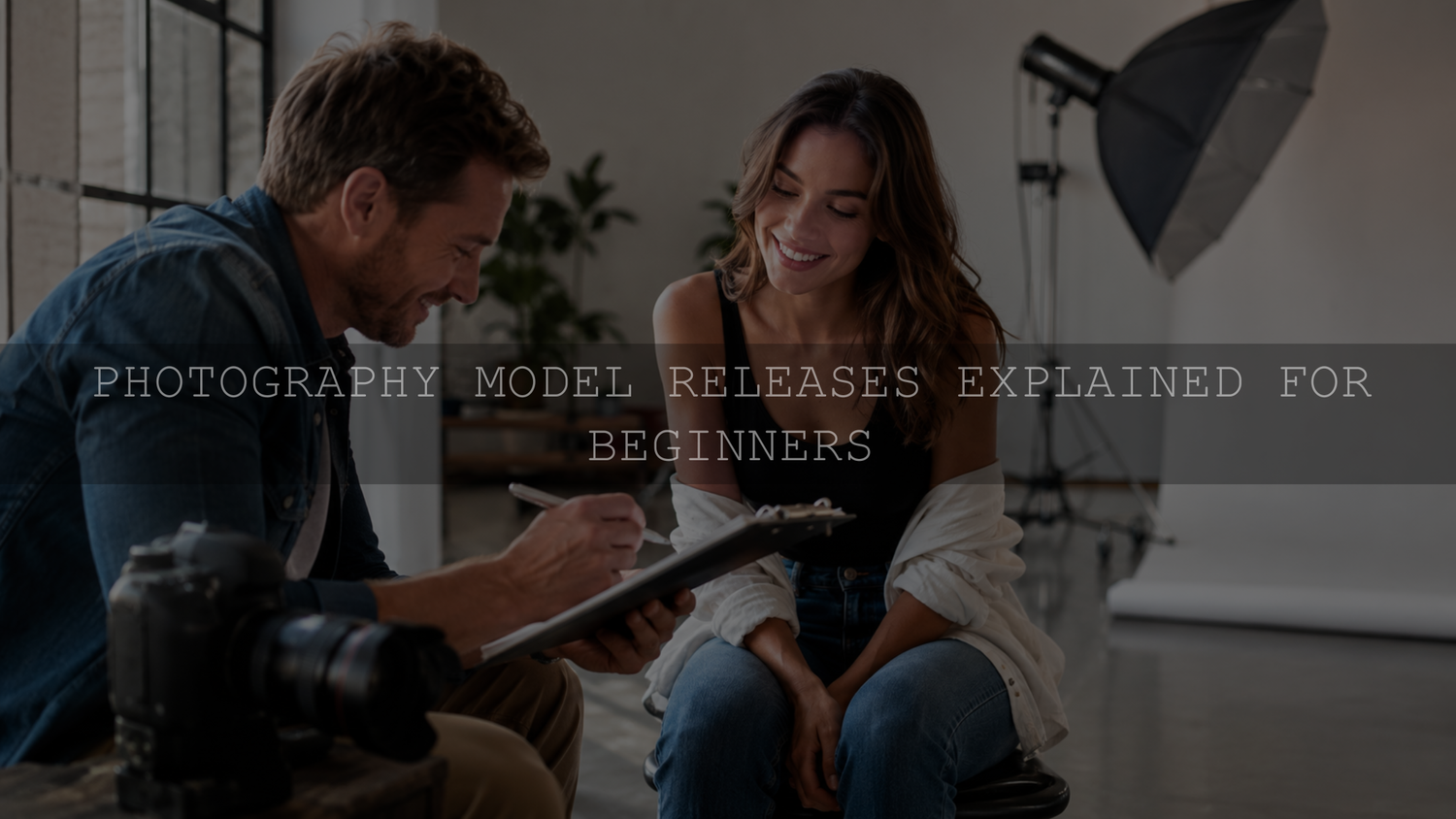
Short answer: A model release is typically a written agreement that documents permission for specified uses of a person's likeness. In the United States, there is no single nationwide model-release rule that makes a release mandatory every time a recognizable person appears in a photograph. The answer depends on how the image will be used, applicable state law, the agreement between the parties and any requirements imposed by a client, publisher or licensing platform.
If a recognizable person's image may be used in advertising, business promotion, stock licensing, merchandise or another context that could commercially exploit or imply an association with that person's identity, obtaining an appropriate release is a strong practical default. It is usually much easier to document permission before the photographs are published or licensed than to resolve the question later.
Important: This article provides general educational information for photographers in the United States. It is not legal advice. Rights of privacy and publicity, contract rules, the legal capacity of minors and other requirements vary by state and situation. For high-value commercial campaigns, sensitive uses or questions about enforceability, have an attorney licensed in the relevant jurisdiction review your release. For broader business setup context, see the AAAPresets guide to legal requirements for a photography business.
What Is a Model Release in Photography?
A model release is an agreement concerning permission to use a person's likeness. It can identify the photographs or session covered by the agreement and define the ways in which the photographer, client or another authorized party may use them.
This matters because ownership of the photograph and permission to use someone's identity are different legal questions. The right of publicity, for example, concerns unauthorized commercial use of a person's name, likeness or other recognizable aspects of identity and is largely governed by state law in the United States. Federal law can also become relevant in some circumstances, including claims involving false endorsement.
A well-drafted release reduces uncertainty by recording what the subject agreed to rather than leaving future uses to assumptions or memories.
A Model Release Is Not the Same as Copyright Ownership
One of the most important distinctions for photographers is that a model release does not automatically transfer copyright in the photograph.
Under U.S. copyright law, copyright initially vests in the author, subject to exceptions such as qualifying works made for hire and later copyright transfers. The U.S. Copyright Office's copyright ownership provisions explain these separate ownership and transfer rules.
That creates two different questions:
- Copyright: Who owns or controls rights in the photograph?
- Model release: What has the recognizable person agreed may be done with their likeness?
Having the copyright does not automatically resolve every privacy or publicity issue involving the person depicted. Conversely, signing a model release does not automatically give the model ownership of the photographer's copyright.
When Should a Photographer Get a Model Release?
There is no universal checklist that replaces jurisdiction-specific legal advice, but several situations make a written release especially useful.
Advertising and business promotion
If a portrait will appear in an advertisement, sponsored campaign, product promotion, marketing page, brochure, packaging or other promotional material, establish the subject's permission before relying on the image.
This includes marketing for the photographer's own business. If you want to show a client's or model's photographs in your website portfolio, social-media marketing, printed samples or studio advertising, the agreement should clearly address those uses instead of assuming that permission to take the photograph automatically includes permission to promote your business with it.
Stock photography and third-party licensing
Stock agencies can impose release requirements independently of whatever the applicable law would require in another context.
Adobe Stock's current model release requirements state that contributors should include a signed model release when submitted content shows someone who can be recognized. Adobe also requires a separate release for each person when a release is required and does not accept combined group releases for that purpose.
A photographer planning to submit stock should therefore check the current rules of the specific marketplace before the shoot rather than assuming every agency follows the same requirements.
TFP and collaborative portrait shoots
A TFP arrangement should not be treated as an automatic model release. TFP describes the exchange between photographer and model, such as photographs being provided instead of or in addition to payment. It does not, by itself, define every future use of the model's likeness.
The collaboration agreement should make clear what each party receives and how the photographs may be used. Depending on the arrangement, model-release language may be incorporated into the main agreement or handled in a separate document.
For the wider collaboration process, including deliverables, scheduling, expenses and usage expectations, see how to organize a TFP photoshoot professionally.
Future commercial licensing
A portrait originally created for a portfolio could later attract interest from a commercial client. If future third-party licensing is realistically contemplated, address that possibility in the original agreement rather than assuming a limited portfolio permission also authorizes an unrelated advertising campaign.
What About Editorial, Fine-Art and Street Photography?
A common shortcut is that commercial photography requires releases while editorial photography does not. That distinction can be useful for identifying risk, but it is too broad to function as a universal legal rule.
News reporting, commentary, documentary work, fine-art display and other expressive uses can raise different legal considerations from advertising or endorsement. The applicable rules can also change with the state, location, subject, manner of publication and surrounding context.
Similarly, photographing someone in a public place and later using that person's identity for commercial promotion are not necessarily the same legal question.
Before publishing or licensing an uncertain image, ask:
- Is the person recognizable?
- Why was the photograph originally created?
- How will it now be published or licensed?
- Could the use reasonably suggest that the person promotes or endorses a product, service or organization?
- What permission has already been documented?
- Are there separate client, publication or platform requirements?
- Does the relevant state's law create additional restrictions?
Model Release vs. Photography Contract vs. Property Release
These documents can appear in the same shoot, but they solve different problems.
- Photography services contract: Usually addresses the photographer-client relationship, such as assignment scope, fees, payment, cancellation, deliverables and licensing.
- Model release: Addresses permission relating to the photographed person's likeness.
- Copyright license: Gives another party permission to exercise specified rights in a copyrighted photograph without necessarily transferring ownership.
- Copyright transfer: Transfers copyright ownership or specified exclusive rights and is governed by separate copyright rules.
- Property release: May address permission involving certain property or other rights when appropriate to the intended use.
One document can sometimes contain several of these provisions, but photographers should not assume that a services agreement automatically contains an adequate model release unless the actual language says so.
What Should a Photography Model Release Cover?
There is no single model-release form that is automatically appropriate in every U.S. state and for every assignment. Instead of copying broad language from an unknown internet template, make sure the agreement matches the work you actually intend to do.
Common subjects to address include:
- The parties: Identify the subject and the photographer or other party receiving permission.
- The session: Record enough information to identify the shoot, such as its date or description.
- The photographs covered: Make it reasonably clear which photographs or recording session the release concerns.
- Permitted uses: Explain whether permission includes portfolio display, social-media promotion, advertising, publication, stock licensing, merchandise or other uses that are genuinely contemplated.
- Media and distribution: Address relevant print, online, social, advertising or other channels when necessary.
- Editing: If meaningful retouching, compositing or alteration is anticipated, the agreement can address the level of permission being granted.
- Third-party use: State whether the photographer may license, assign or otherwise authorize relevant uses by clients or other parties.
- Compensation or exchange: Accurately document payment, TFP arrangements or other consideration when relevant.
- Restrictions: Record any agreed limitations, especially where a subject has excluded a category of use.
- Duration or territory: Address these when the scope of the assignment makes them important.
- Signatures and date: Keep reliable evidence of the agreement and when it was made.
- Parent or guardian information: Use an appropriate process when the person photographed cannot independently enter the required agreement.
The goal is not simply to make the wording as broad as possible. A useful release should make the intended relationship understandable to the people signing it.
Model Releases for Minors
Photographing children deserves additional care. Do not assume that a minor's signature alone creates the same agreement as an adult's signature. Questions about legal capacity and the age of majority can depend on the relevant jurisdiction.
Platforms can also establish their own rules. Adobe Stock currently states that when a model was under 18 when the content was created and is still under 18, a parent or legal guardian's signature is required for its submission process.
For commercial photography involving minors, use documentation appropriate to the jurisdiction and intended use, identify the parent or legal guardian properly, and seek legal advice when the photographs involve sensitive subjects or substantial licensing value.
Group Photos Need Extra Attention
A single signature should not automatically be assumed to cover everyone in a group photograph.
First determine which people are recognizable and what the image will be used for. Then check the requirements of the relevant client or licensing platform. Adobe Stock, for example, currently instructs contributors to submit a separate release for each person when releases are required and does not accept group releases or digitally combined forms for that purpose.
This makes release management particularly important for commercial lifestyle shoots with several models. Build the paperwork into the call sheet or shoot preparation rather than trying to identify and contact everyone months later.
Can a Model Release Be Signed Digitally?
Electronic signatures can be useful for model-release workflows. Under the federal E-SIGN Act, a signature, contract or other covered record generally cannot be denied legal effect solely because it is electronic. That does not mean every electronic process automatically satisfies every other contract, state-law, client or platform requirement.
Adobe Stock currently permits an Acrobat Sign workflow and specifies requirements for releases submitted through that process, including a reference image of the person.
Whichever system you use, keep the completed document securely and make it easy to connect the release with the correct subject and session.
A Practical Model-Release Workflow for Photographers
Before the shoot
- Decide how you genuinely expect to use the photographs.
- Determine whether the photographer, client or another party will license the images.
- Check any stock agency, publisher or client release requirements.
- Use a release appropriate to that scope and jurisdiction.
- Explain important usage terms to the subject rather than presenting unexpected paperwork after the photographs have already been created.
At the shoot
- Make sure names and session details are accurate.
- Complete the signatures and dates required by your chosen form or platform.
- Handle parent or guardian documentation correctly where applicable.
- Give the subject a copy when appropriate.
After the shoot
- Store the signed release with the records for that session.
- Use a consistent filename so the document can be found later.
- Restrict access because releases can contain personal information.
- Keep enough information to associate the document with the correct person and photographs.
- Re-read the agreement before approving a substantially different future use.
A simple system such as organizing releases by shoot date and subject is more useful than having hundreds of unrelated documents in a general downloads folder.
Common Model-Release Mistakes
- Confusing copyright with likeness permission. They address different rights.
- Assuming TFP means unlimited permission. Define usage separately.
- Leaving portfolio promotion unstated. If business marketing matters to you, put it in the agreement.
- Using an unknown template unchanged. A form written for another state, country or purpose may not fit your assignment.
- Waiting until a licensing opportunity appears. The subject may be difficult to locate later or may not agree to the newly proposed use.
- Assuming a public location settles the issue. Where the photograph was taken and how it is later used are different questions.
- Ignoring platform rules. A stock marketplace can require documentation even when the broader legal analysis is more nuanced.
- Losing the signed document. A release that cannot be located when a client asks for it has limited practical value.
- Assuming one release covers every new use forever. Check the actual language before approving a use that differs substantially from the original plan.
Frequently Asked Questions
Do I need a model release to put portraits in my photography portfolio?
There is no single nationwide U.S. answer for every situation. Because a photographer's website and social accounts can promote the photography business, the conservative practical approach is to obtain written permission that expressly covers the portfolio and promotional uses you intend. Applicable state law and the circumstances still matter.
Do I need a model release to sell photographs as stock?
Check the marketplace's current contributor rules. Stock platforms can impose their own documentation requirements. Adobe Stock, for example, currently requires signed releases for recognizable people submitted under its release rules and requires separate releases for each person.
Does a TFP shoot count as a model release?
No. TFP describes the collaboration or compensation arrangement, not automatically the complete scope of permission for using a person's likeness. Put the agreed uses in writing.
Can a model revoke a signed release later?
That cannot be answered reliably without reviewing the specific agreement and applicable law. The wording of the release, contract rules, jurisdiction and circumstances can all matter. Do not assume that simply labeling permission "irrevocable" settles every possible dispute.
Final Takeaway
A model release is best treated as part of a professional permission workflow rather than a form you collect only when a stock website asks for one. Decide how the photographs will be used, document the subject's permission for those uses, separate likeness permission from copyright and client licensing, and keep the signed agreement connected to the correct shoot.
For ordinary portfolio collaborations, that process can reduce misunderstandings. For advertising, substantial licensing, minors or sensitive uses, getting jurisdiction-specific legal review is a sensible business step rather than relying on a generic release downloaded from the internet.
Written by Asanka — creator of AAAPresets, serving more than 10,000 customers.



Leave a comment
This site is protected by hCaptcha and the hCaptcha Privacy Policy and Terms of Service apply.