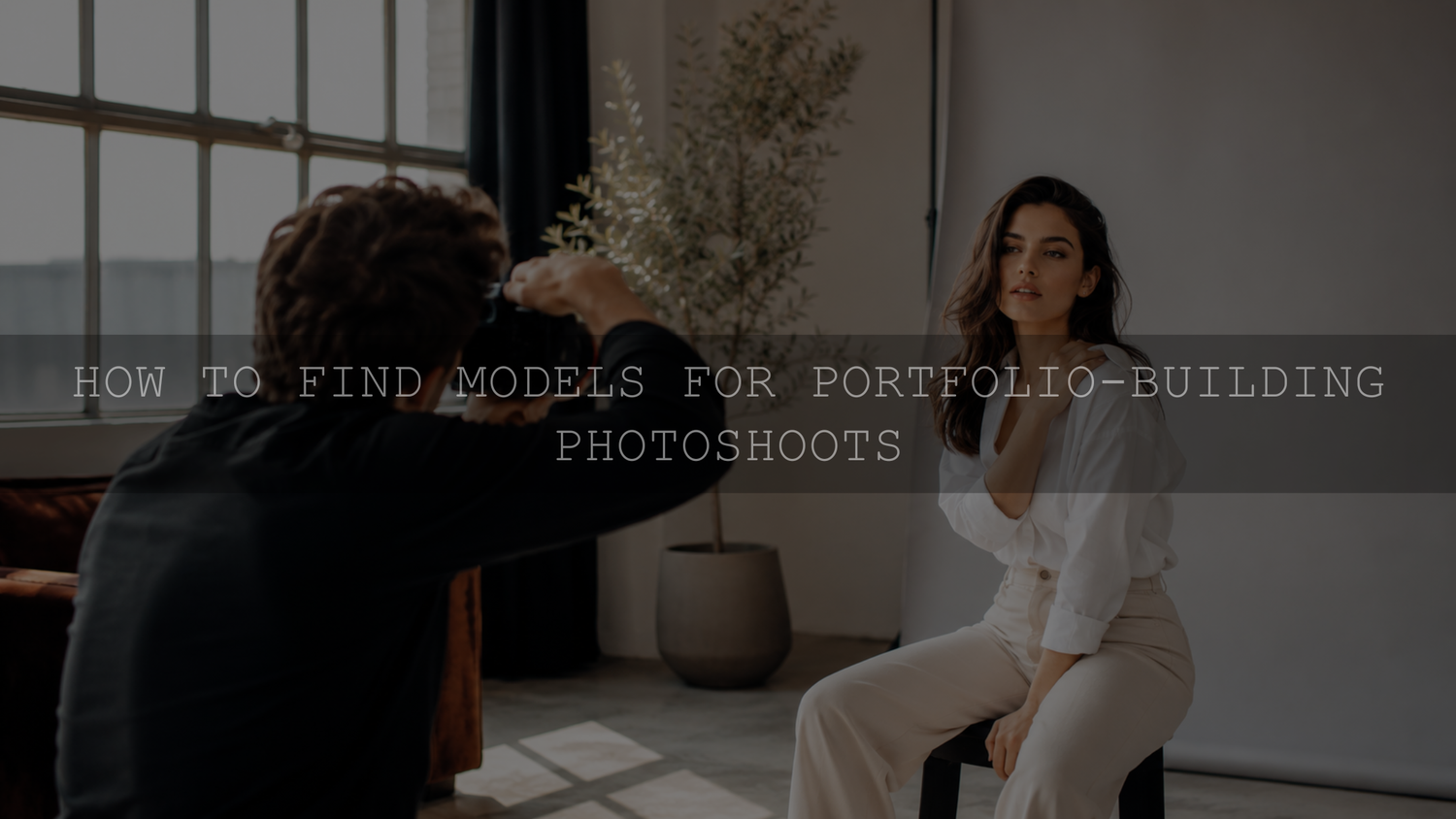
To find models for a photography portfolio, start with the type of work you need the new photographs to prove. Then look for people who fit that specific assignment through your existing network, local creative communities, social platforms, casting websites, performing-arts communities and, when your portfolio is ready, modeling agencies.
The most important part is not finding the person with the largest following. It is finding a reliable collaborator whose appearance, movement and experience fit the work you want future clients to hire you for. A clear brief, professional communication and agreed expectations will usually make a portfolio shoot more useful than sending dozens of vague messages asking people if they want to shoot.
If you are building your first body of work, this fits into the wider process of starting a photography business with no clients: create intentional examples of the assignments you eventually want to sell rather than waiting for paid work to appear first.
Decide What Kind of Model Your Portfolio Actually Needs
Do not begin by searching for anyone willing to stand in front of your camera. Begin with the gap in your portfolio.
A photographer trying to build a clean personal-brand portfolio may need a confident business owner or creator rather than a traditional fashion model. A beauty photographer may need someone who is comfortable with close-up lighting and detailed facial poses. A lifestyle portfolio may benefit more from natural movement and believable interaction than formal modeling experience.
Write down the assignment you are trying to simulate before casting. For example:
- Clean studio beauty portraits with controlled skin tones and close detail.
- Outdoor lifestyle photographs for a fictional clothing campaign.
- Professional personal-brand portraits for a consultant or founder.
- Editorial fashion photographs using dramatic light and movement.
- Casual social-media portraits in a cafe, street or home environment.
This changes the question from “Where can I find a model?” to “Who would help me demonstrate this specific type of photography?”
Where to Find Models for Photography Portfolio Shoots
Start With People Already in Your Network
Friends, relatives, coworkers and local creators can be useful for your first practice sessions because there is already some trust between you. This is especially helpful while you are learning how to give posing directions, maintain conversation, change lighting and operate your camera at the same time.
Choose people because they fit the concept, not simply because they are available. If you want to photograph personal brands, for example, a friend who runs a business may produce more relevant portfolio work than someone whose appearance does not match the type of assignment you want to sell.
Search Instagram and Local Creative Networks
Instagram can help you identify active models, actors, dancers, makeup artists, stylists and creators in your area. Search combinations of your city and the type of work you want to create, then look beyond the first accounts that appear.
Useful discovery methods include:
- Searching city and modeling terms together.
- Checking location tags around studios and creative spaces.
- Looking at people tagged by local makeup artists and stylists.
- Reviewing photographers who create work in a similar genre.
- Looking at recent work rather than judging someone from a single photograph.
Avoid mass-copying the same message to dozens of people. Focus on a smaller number of relevant, personalized approaches.
Use Local Photography and TFP Communities
Local Facebook groups, photography clubs, creator communities and TFP groups can work well because many members have already joined specifically to collaborate.
When posting, state the city, concept, approximate date, compensation arrangement, required experience if any, expected image delivery and intended usage. “Model wanted for photoshoot” gives people very little information to decide whether the project is suitable for them.
Try Dedicated Casting Platforms
Specialized platforms can make searching easier when you want to filter people by location, experience or genre. Model Mayhem's casting search, for example, currently provides casting tools for photographers, models and other creative professionals.
Availability, membership requirements, fees and popularity vary by country and can change, so check whether a platform has an active community in your location before depending on it.
Look Beyond Traditional Models
Actors, dancers, performers and content creators can be useful collaborators when the concept benefits from movement, expression or comfort in front of an audience.
Instead of collecting private student information or contacting people through restricted institutional directories, look for public performing-arts groups, open creative communities, public noticeboards or an appropriate school or workshop coordinator who permits collaboration opportunities to be shared.
Contact Modeling Agencies When Your Portfolio Is Ready
For fashion and beauty work, some modeling agencies may consider test-shoot proposals involving developing talent or new faces. This does not mean every agency will provide a model to an inexperienced photographer. A photographer approaching an agency should already be able to show work that demonstrates relevant lighting, styling, retouching and professional presentation.
Research the agency first. If its models and client work have no connection to your visual direction, a generic request is unlikely to be useful.
When contacting an agency, keep the introduction concise. Include:
- Your name and location.
- Your portfolio or website.
- The type of photography you create.
- A short description of the proposed test.
- The creative team, if already confirmed.
- Possible dates.
- A question asking whether any appropriate developing talent needs updated test material.
If the agency declines, do not repeatedly pressure the booker. Continue developing your portfolio and approach again when your work has changed materially.
Attend Photo Walks, Meetups and Styled Shoots
Photo walks, workshops and organized styled shoots can reduce the production work involved in arranging your first collaborations. They may also introduce you to models, makeup artists, stylists and other photographers who can become future collaborators.
Before paying for an organized event, check how much individual shooting time is provided, how many photographers will share each model, whether portfolio usage is allowed, and whether the event's visual style actually fills a gap in your work.
Write the Casting Brief Before You Contact Anyone
A good casting brief answers the important questions before the model has to ask them one at a time.
Include:
- Purpose: Explain that the project is a portfolio-building shoot and describe what you are creating.
- Concept: Give a short description of the mood, wardrobe and visual direction.
- Date and duration: State the proposed date, approximate start time and expected session length.
- Location: Give the city or general area initially. Avoid publicly posting a private home address.
- Compensation: Clearly say whether the shoot is paid, TFP or another agreed exchange.
- Deliverables: State approximately how many edited photographs the model will receive.
- Delivery: Give a realistic delivery timeframe.
- Usage: Explain where you expect to publish the photographs.
- Wardrobe and styling: State who is responsible for clothing, makeup and hair.
- Team: Identify other people expected to be present.
- Application: Explain what information or portfolio links you need from interested people.
If you cannot explain these basics clearly, the shoot probably needs more planning before you start casting.
How to DM a Potential Model Professionally
Keep your first message short enough to read quickly but specific enough to show that it is a genuine proposal.
Example: Hi [Name], I'm [your name], a photographer based in [city]. I found your work through [specific account, post or local community] and think your look would fit a [brief description] portfolio shoot I'm planning. The session would be [paid/TFP], around [duration], in [general location]. My work is here: [portfolio link]. If the concept sounds relevant, I can send the mood board, proposed date, deliverables and usage details.
Do not overdo the compliment or make comments about someone's body that are unrelated to the professional casting requirements. Keep the discussion about the work.
Understand Paid Shoots and TFP Before Making the Offer
TFP is commonly used for arrangements where creative participants exchange their time for agreed photographs rather than a normal cash fee. The exact meaning and deliverables should still be defined in writing because photographers and models may interpret “TFP” differently.
A TFP collaboration makes the most sense when both sides genuinely need the work being created. It becomes less balanced when the photographer has a commercial client, requires highly specific professional talent or receives most of the value while asking the model to contribute substantial time and expenses without meaningful compensation.
Consider paying a model when:
- You require a particular level of professional posing experience.
- The concept has a strict commercial deadline.
- The model is being hired primarily to execute your brief rather than build mutually useful work.
- The shoot requires significant travel, preparation or specialized skills.
- The intended usage goes substantially beyond a mutual portfolio collaboration.
TFP can be appropriate when both participants want compatible portfolio material, there is no paying client controlling the project, and the exchange of time, images and usage is clearly understood.
Vet Potential Collaborators Before Shoot Day
Finding someone's profile is not the same as knowing whether they are reliable or safe to work with.
Before confirming the session:
- Review several examples of recent work rather than one strong photograph.
- Look for credited collaborations with other photographers or creative professionals.
- Ask mutual contacts or references when appropriate.
- Confirm the concept, boundaries and wardrobe before the shoot.
- Make sure communication remains consistent and professional.
- Consider a brief call when a larger or more complicated production needs additional discussion.
Both photographers and models should take reasonable safety precautions when meeting people found online. Model Mayhem's current member-safety guidance recommends checking references and sharing shoot or meeting details with someone you trust.
For a first collaboration, a professional studio, public location or otherwise appropriate working environment may make everyone more comfortable. Respect a collaborator's reasonable safety arrangements and never pressure someone to shoot clothing, poses or concepts that were not agreed beforehand.
If someone is below the legal age of majority in the relevant jurisdiction, do not treat a normal adult TFP arrangement as sufficient. Parent or guardian involvement and additional legal requirements may apply.
Put Deliverables, Usage and Boundaries in Writing
Even a friendly unpaid shoot should have written expectations. This can be a simple collaboration agreement for a small test or a more formal agreement when the project, usage or production is more significant.
Clarify:
- Whether the arrangement is paid or TFP.
- Which expenses each participant covers.
- How many final edited images will be delivered.
- Whether the model selects any final images.
- Approximate delivery timing.
- Whether RAW or unedited files are included.
- Where the photographer may publish the photographs.
- Where the model may publish the delivered photographs.
- Whether credits or tags are expected.
- Whether images may be submitted to publications.
- Whether advertising or other commercial use is permitted.
- Cancellation or rescheduling expectations.
- Any agreed limits concerning wardrobe, posing or subject matter.
A collaboration agreement and a model release can serve different purposes. A collaboration agreement can document the working arrangement, deliverables and agreed usage between participants. A model release is commonly used to document permission to use a person's likeness for specified purposes. Exact requirements vary by jurisdiction and intended use, so do not assume that one generic form downloaded online covers every situation.
Copyright is another separate issue. In the United States, the U.S. Copyright Office's guidance for photographers states that the person who takes a photograph is generally its initial copyright owner, subject to exceptions such as qualifying work made for hire. That does not make U.S. copyright rules or likeness permissions universal, so use agreements and professional legal guidance appropriate to your location when the intended use creates uncertainty.
Reduce Last-Minute Cancellations With Better Production Planning
Unpaid collaborations can fail when nobody treats the session like a real production. Give collaborators enough information to plan around the shoot.
A simple approach is:
- Agree on the concept and compensation first.
- Confirm the date and approximate duration.
- Share the mood board and wardrobe requirements.
- Confirm the location and team.
- Send a concise call sheet or final details before the session.
- Check the weather and prepare an alternative for outdoor work.
- Confirm again shortly before shoot day.
- Have a backup date when rescheduling would be easier than rebuilding the entire production.
Do not promise unrealistic delivery times simply to make a TFP offer more attractive. Reliability after the shoot is part of building a professional reputation.
Make the Shoot Fill the Portfolio Gap You Identified
Once the model arrives, resist the temptation to abandon the brief and photograph random ideas for several hours. Capture the work the portfolio needs first.
For a portrait or lifestyle session, that might include:
- A strong hero portrait.
- Half-length and full-length variations when appropriate.
- Close portraits that demonstrate skin, focus and lighting quality.
- Natural movement rather than only static poses.
- Horizontal and vertical compositions.
- A wider frame that demonstrates environmental portraiture.
- A few expressions or actions appropriate to the intended client work.
- Enough variation to show that you can produce a consistent series rather than one lucky frame.
Review the results against your original portfolio objective. The strongest photograph is not automatically the most useful portfolio photograph if it does not represent the work you want to sell.
Edit the Session as One Portfolio Project
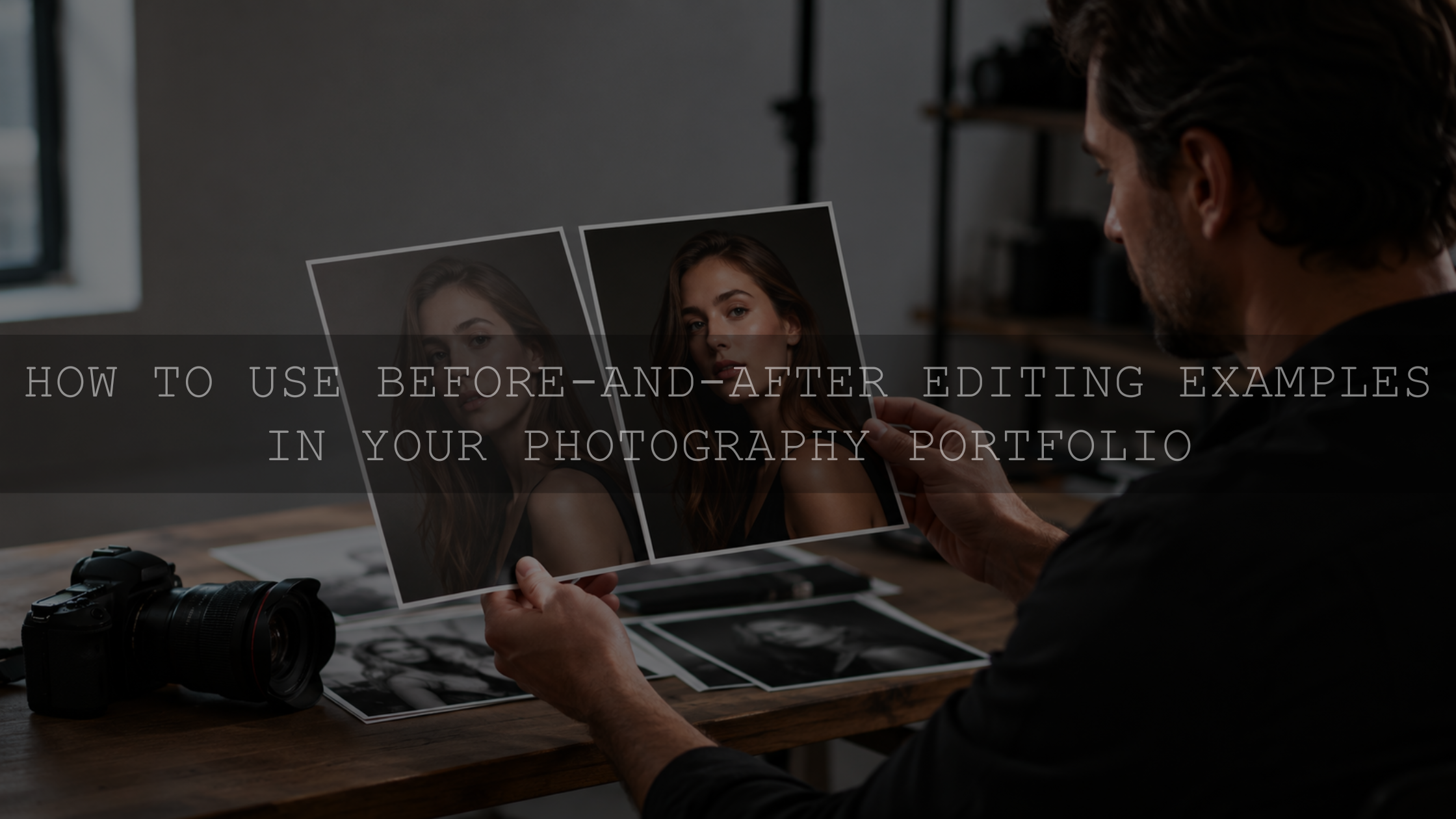
A strong shoot can still weaken a portfolio when every final photograph has a different white balance, contrast level or color treatment. After choosing the strongest frames, establish a consistent editing direction and refine individual photographs for differences in exposure, lighting and skin tone. The guide to creating a consistent editing style for your portfolio explains that process in more detail.
For portrait sessions, the AI-Optimized Skin Tone Safe Pro Portrait Lightroom Presets currently include 8 XMP preset looks for Lightroom desktop workflows and Adobe Camera Raw plus 8 DNG versions for Lightroom Mobile. The pack supports RAW and JPEG photographs and is intended as an adjustable portrait starting point, so exposure and white balance should still be reviewed for each photograph. You can also compare other looks in the Portrait Lightroom Presets collection. Choose the license that matches how you intend to use the work. Eligible AAAPresets products can also be combined through the current Buy 3, Get 9 FREE offer by adding 12 eligible items to the cart and paying for 3.
When the final series is ready for your website, use the separate guide to prepare edited photos for your portfolio website rather than uploading oversized or inconsistently prepared files directly from the editing application.
Common Mistakes When Looking for Portfolio Models
- Posting a vague casting call: Give enough information for someone to decide whether the project is relevant.
- Choosing by follower count: Select people based on the concept and required skills instead.
- Sending generic mass DMs: Personalize genuine opportunities.
- Calling every unpaid shoot TFP: The exchange should provide meaningful value to both participants.
- Changing the concept on set: Do not introduce unexpected wardrobe, nudity, intimate posing or other significant changes without clear agreement.
- Leaving image delivery vague: Agree on approximate quantity and timing beforehand.
- Promising every RAW file: Only include unedited files when you genuinely intend to provide them.
- Ignoring usage: Portfolio display, social posting, editorial submissions and advertising are not automatically the same permission.
- Waiting until the shoot to discuss boundaries: Important limitations belong in pre-production.
- Editing only one hero frame well: A portfolio should demonstrate repeatable quality across a useful series.
Frequently Asked Questions
How can a beginner photographer find models without a portfolio?
Start with friends, local creators, actors or other people already comfortable collaborating with you. Use the first sessions to create a small set of relevant work. Once you can show several strong photographs in the style you want to pursue, approaching unfamiliar models, casting communities and agencies becomes easier because they can evaluate what you actually create.
Should photographers pay models for portfolio shoots?
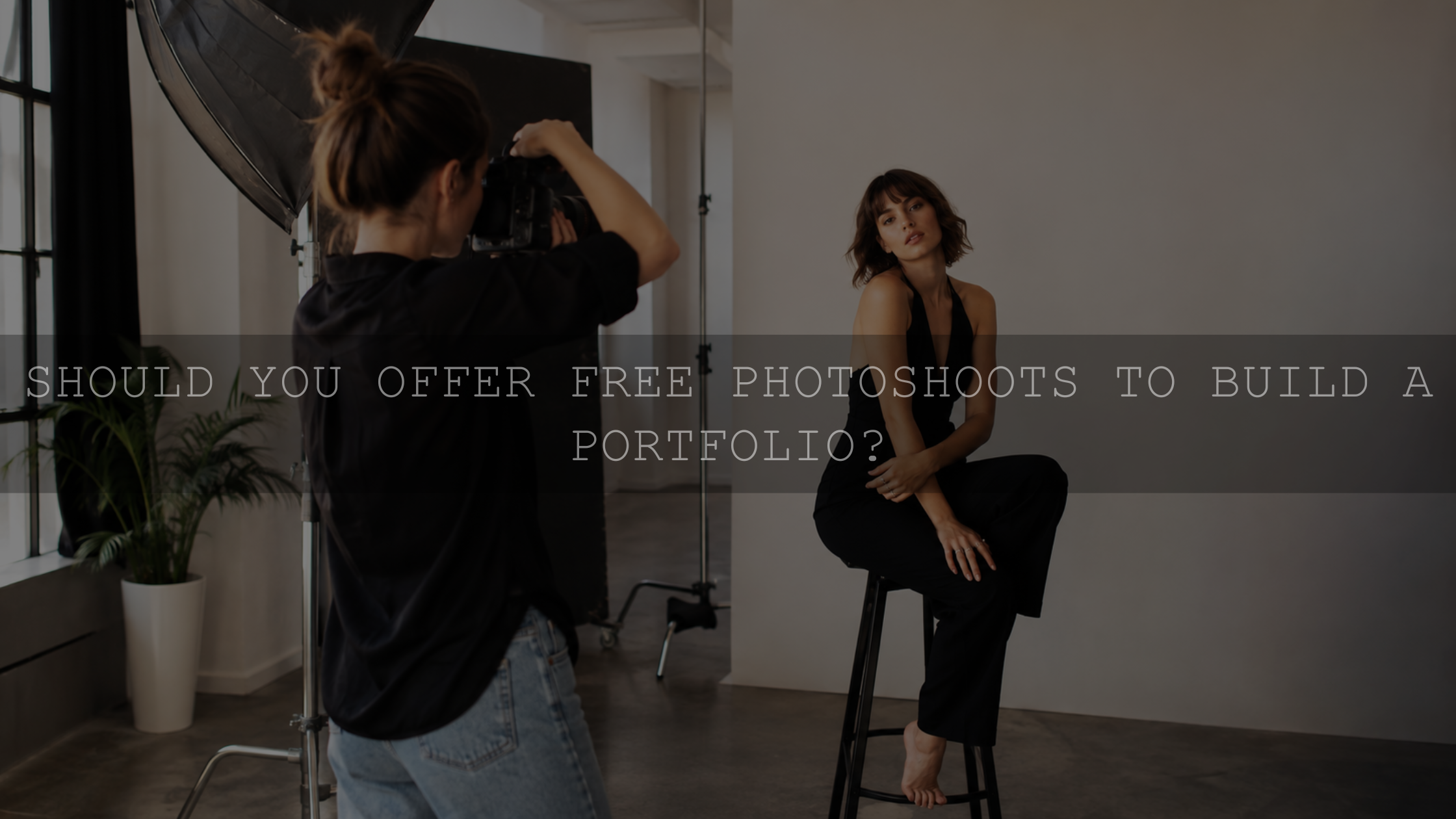
Sometimes. A mutual TFP arrangement can make sense when both people need compatible portfolio material. Paying is generally more appropriate when the photographer requires specific professional skills, controls most of the creative requirements, has commercial usage needs or asks the model to contribute significant time or expense primarily for the photographer's benefit.
Do you need a model release for portfolio photography?
There is no single global answer. Requirements depend on local law and the intended use of the photographs. A collaboration agreement can document the working arrangement, deliverables and agreed usage, while a model release is commonly used to document permission concerning use of a person's likeness. Portfolio and business-promotional uses can raise different considerations from purely personal work, so use documents appropriate to your jurisdiction when necessary.
Build Relationships, Not Just a List of Models
The easiest model search becomes the one you no longer need to start from zero. Deliver what you promised, communicate when the gallery will be ready, credit collaborators according to the agreement and treat everyone professionally on set.
A reliable model, photographer, stylist or makeup artist can introduce you to an entire local creative network. Over time, those relationships make it easier to plan stronger portfolio shoots because you are building a team of people who already understand how you work.
Start with one clear portfolio gap, write the brief, find the right collaborator and execute that project well. A small number of intentional shoots can demonstrate your direction more clearly than a large collection of unrelated portraits.
Written by Asanka — creator of AAAPresets, serving more than 10,000 customers.

Leave a comment
This site is protected by hCaptcha and the hCaptcha Privacy Policy and Terms of Service apply.