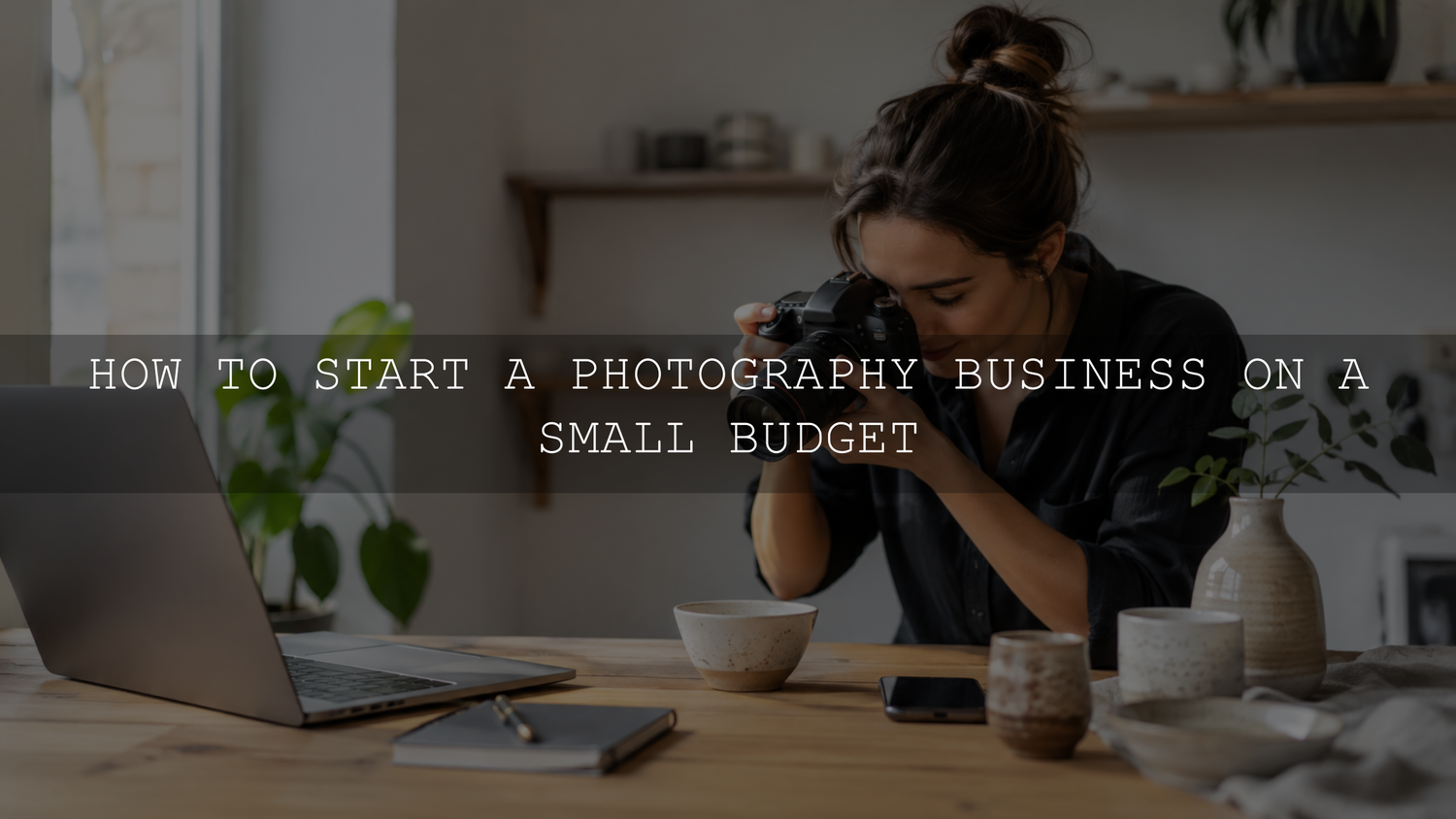
You can start a photography business with very little money if you keep the first version of the business simple. Use the camera, phone, lens, computer and free tools you already have. Choose one service you can deliver reliably, build a focused portfolio, find a few real people or small businesses to photograph, and reinvest only after paid work begins.
The goal is not to look like a full studio on day one. The goal is to prove that you can create usable images, communicate clearly, protect files and deliver a consistent result. A small, careful start is often safer than buying expensive gear before you know which type of photography people will actually pay you for.
Start With the Gear You Already Own
Do not begin by comparing your setup to a full-time wedding photographer or commercial studio. A beginner photography business can start with a smartphone, an entry-level DSLR, a mirrorless camera or borrowed gear, as long as the service you offer fits the equipment.
For example, a phone may be enough to practice composition, product styling, social content and behind-the-scenes work. An older DSLR with one sharp lens can be enough for portraits, small events or portfolio sessions in good light. What matters first is consistency, not owning the newest camera body.
Before buying anything, test your current gear in the exact situations you want to sell:
- Photograph one person outdoors in soft natural light.
- Shoot a small product near a window using a clean background.
- Capture a simple event or gathering for practice.
- Edit and export a complete set, not just one favorite image.
- Review which problems keep repeating: focus, low light, color, file storage or delivery.
If the same limitation keeps damaging the final result, that limitation becomes your first upgrade priority. If the work looks clean enough for your starter offer, keep using what you have.
Choose a Low-Cost Photography Niche First
A new photographer with little money should not offer every type of photography at once. Weddings, large events, studio product work and commercial campaigns can require backup gear, lighting, insurance, assistants or location costs. Start with a service that can be done with minimal equipment and a clear delivery promise.
Good low-budget starter options include:
- Outdoor portraits using natural light.
- Personal brand photos for creators, coaches or small business owners.
- Simple product photos for handmade sellers or local shops.
- Social media content for cafes, salons, fitness trainers or boutiques.
- Mini sessions for couples, graduates, families or professionals.
Pick one niche for the next 60 to 90 days. This makes your portfolio easier to understand and your message easier to sell. “I photograph clean outdoor portraits for local professionals” is much stronger than “I do portraits, weddings, pets, products, food, events and travel.”
Build a Portfolio Without Paid Clients
No clients does not mean no portfolio. You can create a starter portfolio by planning practice shoots that look like real client work. The key is to stop shooting random images and start building proof for one specific offer.
Plan three to five portfolio sessions around the service you want to sell. If you want portrait clients, photograph different people in similar lighting so the gallery feels consistent. If you want product clients, choose three product types and show clean angles, detail shots and lifestyle images. If you want small business content, create a mock content day for a local cafe, barber, salon or boutique.
When collaborating for free, be clear about the exchange before the shoot:
- Explain that the session is for portfolio building.
- Ask for permission to use selected images on your website and social media.
- Give the person or business a small edited gallery.
- Request a short testimonial if they are happy with the result.
- Do not promise unlimited edits, all RAW files or unrealistic delivery times.
This keeps the session professional even when no money changes hands.
Use Free Marketing Before Paid Ads
A beginner photographer does not need a large ad budget. At the start, your best marketing is direct, local and visible. People need to see what you shoot, who you help and how they can book you.
Create one simple place where your best work lives. This can be a free website, a clean Instagram profile, a Google Business Profile where available, or a portfolio page. Keep it focused. Show your best 15 to 30 images instead of uploading every photo you have ever taken.
Then use simple outreach:
- Post before-and-after edits, behind-the-scenes clips and finished galleries.
- Message local small businesses with a specific idea, not a generic “need photos?” pitch.
- Ask friends and past collaborators to share your work.
- Join local creator, vendor, model, makeup artist and small business groups.
- Offer a limited number of discounted starter sessions to get real booking experience.
Free marketing works best when your offer is specific. A local boutique is more likely to reply to “I can create 15 clean product and lifestyle photos for your next Instagram launch” than a vague message saying you are available for photography.
Keep Your First Offer Simple
Many new photographers lose money because their first package is too complicated. A simple offer is easier to explain, sell and deliver.
A starter portrait offer could look like this:
- 30-minute outdoor session.
- One location.
- One outfit.
- 10 edited images.
- Delivery within 5 to 7 days.
- Optional extra images available for an added fee.
A starter product offer could look like this:
- Up to 5 small products.
- White background and simple lifestyle setup.
- 3 edited images per product.
- Web-ready JPEG delivery.
- One round of small revisions.
Do not sell huge packages before your workflow is tested. Start with something you can finish well, then expand once you understand how long shooting, editing, communication and delivery really take.
Protect Your Files From the Beginning
Even a low-budget photography business needs a basic file protection system. Losing client photos can damage trust faster than using an older camera.
At minimum, build a simple habit:
- Copy the files from the card or phone to your computer.
- Make a second copy on an external drive or cloud storage.
- Keep the original files untouched until the final gallery is delivered.
- Export web-ready JPEG files into a separate delivery folder.
- Name folders by date, client name and project type.
Free cloud storage may be enough for early practice work, but do not rely on one device only. As soon as you begin charging, storage becomes a real business expense worth planning for.
Create a Repeatable Editing Style
A photography business is not only about taking good photos. Clients also notice whether the final gallery feels consistent. The colors, skin tones, contrast and brightness should look like one complete set, not a collection of random edits.
If your camera supports RAW, use it when possible. Adobe explains that RAW files can provide more editing flexibility than JPEG files, including more room to adjust exposure, recover highlight detail and control white balance. You can read Adobe’s official guide to the benefits of shooting in RAW format.
Before adding a creative style, correct the basics first:
- Crop and straighten the image.
- Fix exposure so the subject is clear.
- Adjust white balance so skin, clothing and neutral areas look believable.
- Recover highlights and shadows where possible.
- Apply a consistent color style.
- Review every image individually before export.
If you use presets, treat them as starting points, not final edits. A preset can help create a consistent mood across a gallery, but each photo still needs small adjustments because light, camera profiles, skin tones and backgrounds change from image to image. For a deeper workflow, read the AAAPresets guide to building a repeatable Lightroom editing workflow.
Spend Money Only When It Solves a Real Problem
When the first payments arrive, do not immediately buy the most exciting gear. Reinvest based on the problem that is currently limiting your paid work.
- If your images are soft in low light, consider a faster lens before a new camera body.
- If indoor sessions look flat, learn one-light flash or buy a basic light modifier.
- If editing is slow, improve your workflow before buying more presets or software.
- If clients ask for quicker delivery, invest in storage, templates or a better computer.
- If you are shooting important events, prioritize backup equipment and file safety.
A good rule is simple: do not buy gear for imaginary future jobs. Buy gear when it helps you deliver the type of work people are already requesting or paying for.
Use Presets Carefully in a Client Workflow
Presets can be useful for a new photography business because they help you build a consistent editing direction faster. They are especially helpful when you are still learning how tone, color, contrast and skin tones work together.
For portrait work, the AI-Optimized Skin Tone Safe Pro Portrait Lightroom Presets include 8 XMP and 8 DNG presets designed for clean portrait color, soft contrast and natural-looking skin. For a wider editing library, the 1000+ Master Lightroom Presets Bundle includes DNG files for Lightroom Mobile and XMP files for Lightroom Desktop.
Use presets with judgment. Apply the look, then adjust exposure, white balance, highlights, shadows, saturation and skin tones. A clean client gallery should feel polished, but it should still look like the person, product or place you photographed.
Know When to Charge
You do not need to be famous before charging, but you should be able to deliver what you promise. Before accepting paid work, make sure you can complete a full session from inquiry to delivery.
You are closer to charging when you can:
- Show a focused portfolio in one niche.
- Explain what the client receives and when.
- Produce a consistent edited gallery, not just one strong image.
- Back up files safely.
- Communicate pricing, location, delivery and revision limits clearly.
- Handle small problems without panicking.
Start with lower-risk sessions before high-pressure jobs. A personal brand mini session is easier to manage than a wedding. A simple product shoot is easier than a large commercial campaign. Build confidence through repeatable work.
Final Thoughts
Starting a photography business with no money is not about pretending costs do not exist. It is about delaying unnecessary costs until the business proves what it needs. Use the equipment you already own, choose one clear offer, build a focused portfolio, market locally, protect your files and reinvest carefully.
As your editing workload grows, presets can give you a faster starting point for a more consistent Lightroom workflow. Browse Lightroom Presets for Mobile and Desktop when you are ready to create a more organized editing system. Buy 3, Get 9 FREE.
Written by Asanka, creator of AAAPresets.

Leave a comment
This site is protected by hCaptcha and the hCaptcha Privacy Policy and Terms of Service apply.