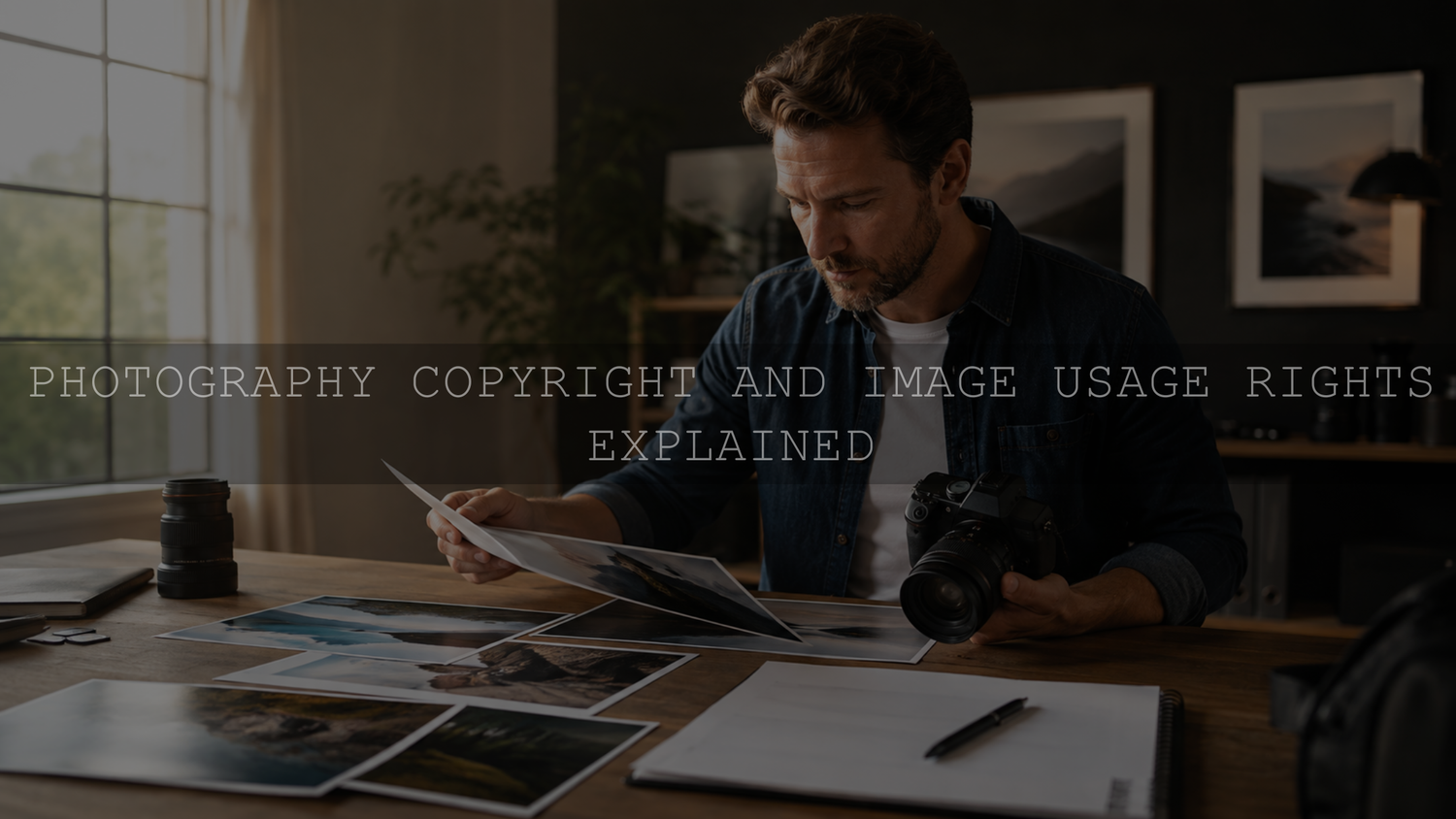
Short answer: In the United States, an original photograph is generally protected by copyright when it is created and fixed, and the photographer is usually the initial copyright owner. That does not mean every image-use question is answered by copyright alone. A license can give another person permission to use a photograph without transferring copyright ownership, while fair use, model or likeness rights, trademarks and other restrictions may also affect a particular use.
If you find a photograph online, receive one from a client, license one from a stock library or want to repost somebody else's work, the practical question is not simply whether you can download the file. You need to determine what permission covers the exact way you intend to use it.
Important: This article provides general educational information about photography copyright and image usage rights in the United States. It is not legal advice. Copyright, contract, privacy, publicity and other laws can vary by situation and jurisdiction. For an infringement claim, high-value commercial campaign, disputed license or other situation with significant legal consequences, consult an attorney who can review the specific facts.
Who Owns Copyright in a Photograph?
Under U.S. copyright law, copyright protection generally begins when an original photograph is fixed. For photography, the U.S. Copyright Office explains that fixation occurs when the picture is taken. Registration is not required for copyright protection to begin.
The person who takes the photograph is generally the author and initial copyright owner, but there are important exceptions. Photographs created within the scope of employment can qualify as works made for hire. A commissioned photograph can qualify as a work made for hire only in limited circumstances when the statutory requirements are satisfied, including an express agreement and a qualifying statutory purpose.
Copyright ownership can also be transferred. Under Section 204 of the Copyright Act, a transfer of copyright ownership, other than by operation of law, generally must be in writing and signed by the owner of the rights conveyed or that owner's authorized agent. See the U.S. Copyright Office copyright ownership and transfer provisions.
That distinction matters when photographs are created for clients. Paying a photographer, receiving JPEG files, possessing a print or paying for a photoshoot does not by itself establish that the client owns the copyright. The contract may instead give the client a license defining what the photographs can be used for.
The U.S. Copyright Office guidance for photographers explains copyright ownership, registration and works made for hire in greater detail. Although copyright protection is automatic, registration can provide important enforcement benefits and is required before bringing an infringement action in federal court for a U.S. work.
Can You Use a Photo You Found Online?
A photograph being publicly viewable does not by itself give other people permission to copy and republish it. The absence of a watermark, copyright symbol or visible warning also does not establish that the photograph is free to use.
Before publishing a third-party image, use a simple verification process:
- Identify the original source. Try to determine who created the photograph rather than relying on a repost, screenshot or search result.
- Identify the permission. Look for a stock license, Creative Commons license, written permission, public-domain designation or another valid basis for the use.
- Match the permission to your use. A license suitable for an editorial article may not authorize an advertisement, product package, paid social campaign or merchandise.
- Check restrictions. Look for limits involving modifications, commercial use, attribution, territory, duration, distribution or transfer to a client.
- Check separate rights when relevant. A copyright license may not answer every question involving an identifiable person's likeness, trademarks or other protected interests.
- Save evidence. Keep the license, receipt, permission email, source URL and relevant terms with the image.
Giving the photographer credit can be required by a license and is often appropriate, but attribution is not a substitute for permission. If the underlying use is unauthorized, adding a photographer's name does not by itself create a license.
If your use specifically involves customer-created social content, the AAAPresets guide to using customer photos in branded social content covers permission records and publishing workflow in that narrower context.
Copyright Ownership and Image Usage Rights Are Different
Copyright ownership describes who holds the copyright. Image usage rights usually describe what another person is permitted to do under a license or agreement.
A photography license can define matters such as:
- Web, social, print, advertising or editorial use.
- Commercial or noncommercial use.
- Geographic territory.
- Duration.
- Number of impressions, copies or products when applicable.
- Whether the image can be modified or cropped.
- Whether use is exclusive or nonexclusive.
- Whether a client or another party may receive or sublicense the image.
There is no reason to assume that two licenses carrying similar labels provide identical rights. Read the actual terms that apply to the specific image and provider.
Editorial and Commercial Use
Terms such as editorial use only and commercial use are commonly used by stock libraries and licensors, but the provider's actual agreement determines what those labels permit.
An image marked for editorial use may have restrictions against advertising, promotional or merchandising uses. Conversely, obtaining a commercial image license does not automatically answer every separate question concerning a person's likeness, trademarks, sensitive contexts or other rights.
Royalty-Free Images
Royalty-free does not mean that an image is necessarily free of charge. The term describes a licensing structure rather than the purchase price. Depending on the provider, an asset may require an initial payment while allowing repeated uses within the scope of the license without a separate royalty for every use.
For example, Getty Images licensing guidance states that its standard royalty-free license allows a range of uses without requiring a royalty each time the licensed content is used, subject to its content license agreement.
Rights-Managed Images
Rights-managed licensing, where offered, commonly ties permission to factors such as the type of project, placement, geographic area and duration. Additional projects or uses can require additional permission.
Do not assume that a rights-managed license automatically provides exclusivity. Any exclusivity must come from the actual license terms.
Creative Commons Images
Creative Commons provides standardized copyright licenses that allow creators to grant advance permission under specified conditions. There are six main Creative Commons license types, and all six require attribution. Individual licenses can also contain conditions covering noncommercial use, adaptations and ShareAlike distribution.
For example, an image carrying a NoDerivatives condition should not be treated the same way as an image licensed for adaptation. A NonCommercial condition also requires you to evaluate whether your intended use falls within the license.
CC0 is separate from the six Creative Commons licenses. It is a public-domain dedication tool intended to allow a rights holder to waive copyright and related rights to the extent legally possible. Review the official Creative Commons license descriptions rather than relying only on a short license abbreviation copied onto another website.
Public Domain Images
A work that is genuinely in the public domain is not restricted by copyright in the same way as a copyrighted photograph. Public-domain status can arise for different reasons, including expiration of copyright or a valid public-domain dedication such as CC0.
Copyright duration depends on factors such as when a work was created or published and the type of authorship involved. The U.S. Copyright Office copyright-duration guidance provides general information about those rules.
Verify public-domain status from a trustworthy source before publishing. A website calling an image "public domain" does not necessarily prove that the person who uploaded it had authority to make that statement. Separate issues involving privacy, publicity, trademarks or other laws can also exist even when copyright is not the obstacle.
How Fair Use Applies to Photography
Fair use is an important part of U.S. copyright law, but it is not automatic permission for blogs, businesses, educators or news publishers to use any photograph they want.
Section 107 requires a case-specific evaluation of four factors:
- The purpose and character of the use, including its commercial or nonprofit educational nature and how the original work is being used.
- The nature of the copyrighted work.
- The amount and substantiality used in relation to the copyrighted work as a whole.
- The effect on the potential market for or value of the copyrighted work.
No single factor automatically decides every case. Criticism, comment, news reporting, teaching, scholarship and research are examples of purposes identified by copyright law, but placing a photograph inside one of those types of content does not automatically make the use fair.
Similarly, giving credit, reducing the image size, cropping it or describing a blog as educational does not by itself establish fair use. There is also no fixed percentage or amount that automatically makes a use fair. The circumstances of the actual use must be evaluated together.
The U.S. Copyright Office Fair Use Index explains the four factors and provides access to information about court decisions showing how fact-specific fair-use analysis can be.
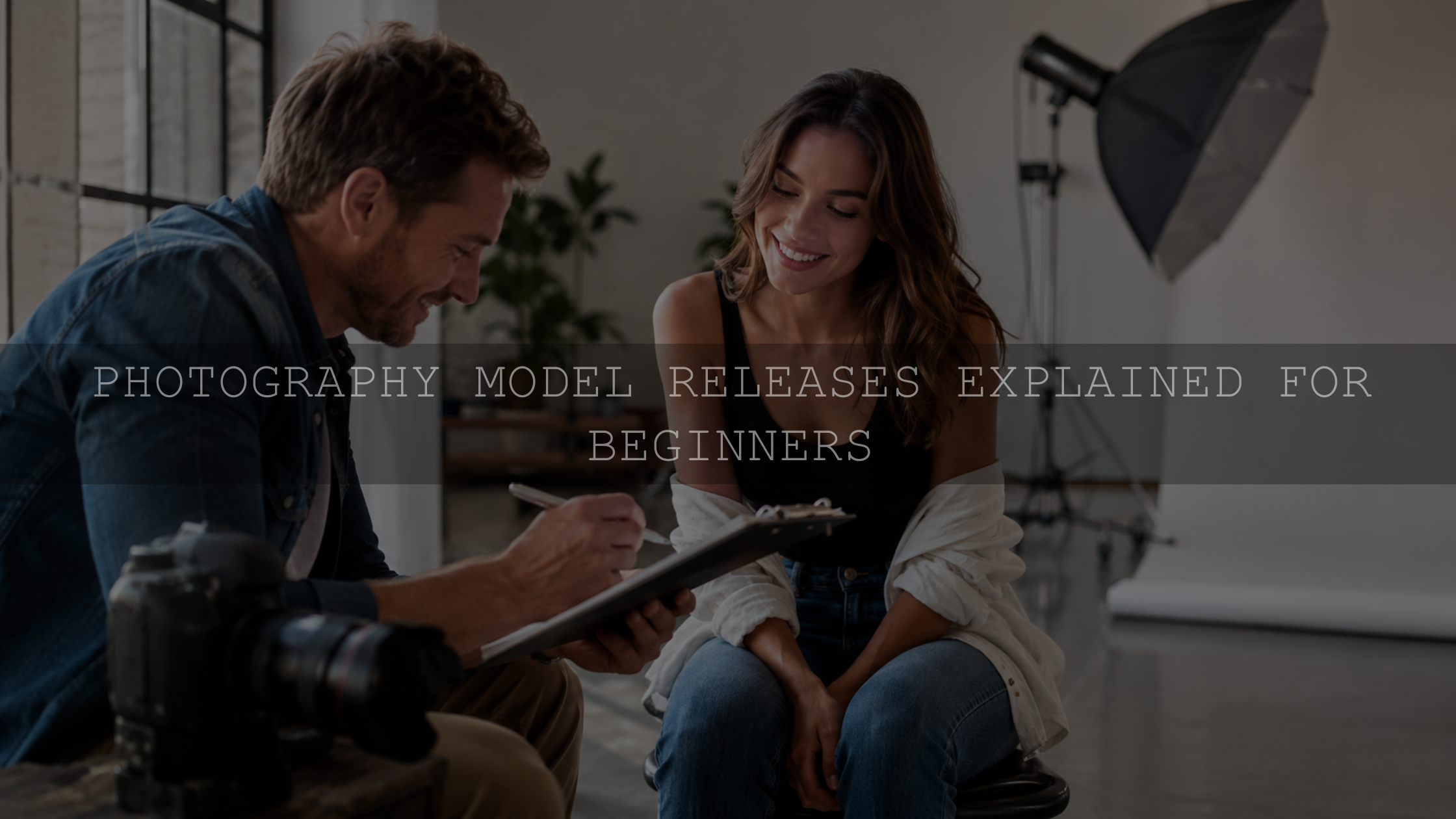
Copyright and Model Releases Answer Different Questions
One of the easiest mistakes to make is treating copyright permission and permission from the person appearing in a photograph as if they were the same thing.
A photographer may own the copyright in a portrait while a proposed advertising use of the person's identity raises a separate question involving permission, privacy or publicity rights. Likewise, receiving a model release does not automatically transfer the photographer's copyright to the person holding the release.
For stock photography, check both the image license and any information the provider gives about releases or restrictions. For an independently commissioned photograph, the photography agreement should clearly distinguish ownership of the photograph from the client's permitted uses and any permission concerning identifiable people.
Keep an Image Rights Log
For a business, blog or content team that publishes photographs regularly, relying on memory is a weak rights-management system. A simple image rights log can make future questions much easier to resolve.
For each third-party photograph, record:
- The asset or file name.
- The photographer or creator.
- The original source URL.
- The date the image was acquired.
- The stock provider or licensing source.
- The license type and a saved copy of the applicable terms.
- The permitted channels and uses.
- Any duration or geographic restrictions.
- Attribution requirements.
- Known model or property release information when relevant.
- The receipt, invoice, permission email or other evidence supporting the use.
This record becomes particularly valuable when a website is redesigned, an old article is republished, a client asks for an asset or an image originally used organically is later considered for paid advertising.
Check the License Again When the Use Changes
Permission should be evaluated against the actual use, not just the image itself.
For example, imagine that a photograph was originally licensed for an editorial blog post. Six months later, the business wants to reuse the same image in a paid advertisement or place it on merchandise. The fact that the first use was authorized does not prove that the new use is also covered.
Before repurposing a licensed photograph, check:
- Whether the new medium is permitted.
- Whether advertising or promotional use is permitted.
- Whether the license has expired.
- Whether geographic restrictions apply.
- Whether modification or cropping is allowed.
- Whether the image can be transferred to a client or another business.
- Whether additional releases or permissions are needed for the new context.
What to Do If You Receive a Copyright Infringement Notice
Not every copyright notice is the same. You might receive a direct demand from a photographer or licensing representative, a notification from your hosting provider following a copyright takedown request, or formal legal documents. Those situations can require different responses.
A sensible first review includes the following:
- Preserve the notice and your records. Save the message, affected URL, image, license receipt, permission emails and any other relevant documentation.
- Identify the work and claimant. Confirm which photograph is involved and who is asserting rights.
- Check your permission. Review the actual license or agreement rather than relying on where the file was downloaded from.
- Review the challenged use. Determine whether your license covered that website, advertisement, social post, product or other placement.
- Consider removing or unpublishing the image while the issue is reviewed if your authorization cannot be confirmed. Removing an image does not automatically resolve a claim concerning earlier use.
- Do not ignore formal legal deadlines. Obtain qualified legal advice when a demand is significant, ownership is disputed, court documents are involved or you are uncertain about your position.
A DMCA Takedown Is a Specific Process
The Digital Millennium Copyright Act notice-and-takedown framework under Section 512 applies in specific online-service-provider safe-harbor contexts. It should not be treated as another name for every email alleging copyright infringement.
When an online service removes or disables access to content following a qualifying notice, the person who posted the material may have access to a counter-notice process when they genuinely believe the removal resulted from mistake or misidentification. Counter-notices include formal legal statements, including statements made under penalty of perjury, so they should not be submitted casually.
The U.S. Copyright Office Section 512 resources explain the notice, removal, notification and counter-notice process.
How Photographers Can Protect Their Own Images
Photographers can also make future rights questions easier to manage by keeping clear records from the beginning.
- Preserve original files and relevant creation records.
- Put client usage permissions in written agreements.
- Keep copyright transfers separate from ordinary licenses.
- Define permitted commercial, editorial, social and advertising uses clearly when relevant.
- Store releases separately from copyright licenses so the two are not confused.
- Consider whether copyright registration is appropriate and remember that registration timing can affect available remedies.
- Keep copies of licenses and correspondence when photographs are supplied to publishers, agencies or clients.
A watermark can help communicate authorship or discourage casual copying, but copyright protection does not depend on placing a watermark over the photograph.
Use a Rights-First Publishing Workflow
The most reliable way to approach photography copyright and image usage rights is to separate three questions: Who owns the photograph? What permission covers this use? Are any additional clearances relevant?
Use your own photography, properly licensed images, correctly used Creative Commons material, verified public-domain work or another use for which you have a defensible legal basis. Then keep the evidence with the asset instead of trying to reconstruct the permission months or years later.
When the answer is unclear, especially for advertising, high-value campaigns or an active infringement dispute, obtaining specific legal advice is safer than relying on assumptions about what is "free," "editorial" or "fair use."
Written by Asanka — creator of AAAPresets.


Leave a comment
This site is protected by hCaptcha and the hCaptcha Privacy Policy and Terms of Service apply.