How to Match Drone and Ground Footage in 2026 (So Your Edit Feels Like One Film)
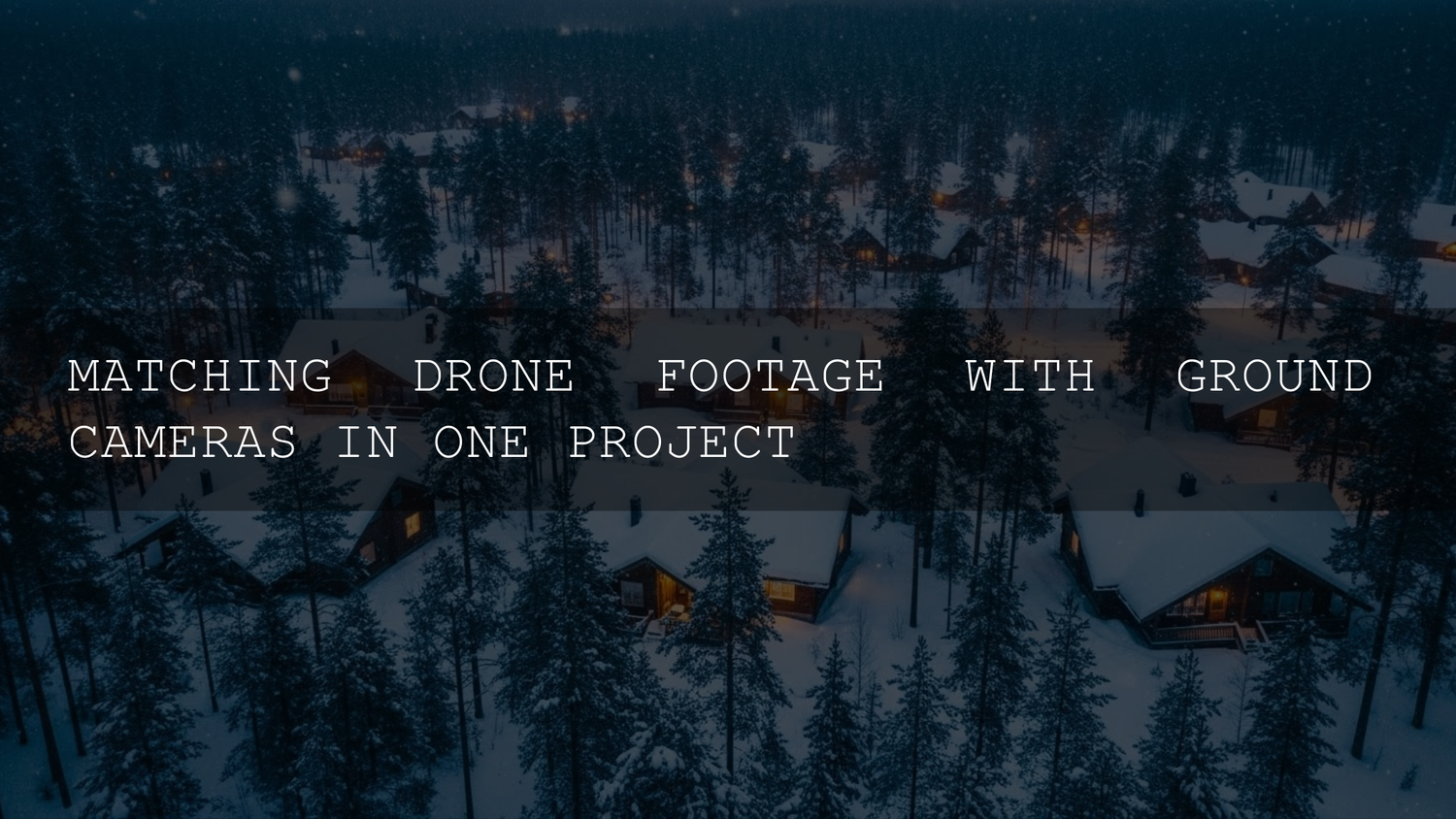
If you’ve ever dropped a beautiful drone clip into your timeline and thought, “Why does this feel like it belongs to a different project?”, you’re not alone. In 2026, audiences are used to cinematic drone footage and tight ground-level storytelling—but they expect it to cut together smoothly. This guide shows a practical way to match drone and ground footage using smart capture habits, color matching between cameras, and a clean post workflow (especially in DaVinci Resolve color grading and Premiere Pro Lumetri). We’ll also talk about when to use drone LUTs (including DJI D-Log / D-Log M workflows) and when manual grading is the better move.
If you want a fast, reliable starting point for matching aerial and ground clips, start with a purpose-built drone look pack like 70+ Cinematic Drone Video LUTs Pack and browse more options in Cinematic Drone Video LUTs for Video Editing. When you’re ready to build a bigger look library, you can Buy 3, Get 9 FREE when you add 12 items to your cart.
Why Matching Aerial and Ground Shots Matters More Than Ever
Drone shots used to be “bonus b-roll.” Now they’re part of the main language of storytelling. When they don’t match your ground camera, the viewer feels the seam—even if they can’t explain it.
- Continuity = trust: When colors, contrast, and motion feel consistent, your audience stays inside the story instead of noticing the gear swap.
- Scale + emotion: Aerial establishes the world; ground captures faces, detail, and tension. Matching them makes your story feel bigger without feeling disjointed.
- Brand and client consistency: Ads and documentaries need reliable “house color.” Matching footage protects skin tones and product colors across shots.
- Faster editing: When footage starts in the same ballpark, one hero grade can be rolled out with minor tweaks.
The Core Rule: Match First, Style Second
The biggest mistake I see is applying a heavy creative LUT to everything and hoping it “glues” the cameras together. It usually does the opposite—because each camera reacts differently to the same LUT.
Workflow mindset: Normalize both cameras → match exposure/white balance → match saturation and skin tones → then add your creative look.
Pre-Production: Simple Planning That Saves Hours in Post
You don’t need a huge crew. You just need a repeatable plan.
Decide the “deliverable look” before you shoot
- Rec.709 SDR? Most YouTube and social deliverables still live here.
- HDR? Great for premium delivery, but it raises the matching difficulty.
- Film-emulation look? If yes, plan for a gentle, controlled pipeline (not a single “magic” LUT).
Choose one reference frame (your “hero shot”)
Pick the shot that best represents the final mood—often a clean ground close-up with skin tones. Everything else (including drone) gets matched to this.
Build a quick shot list with matching points
- Establishing drone wide → ground medium → ground close-up (same direction of light if possible)
- Drone push-in → ground push-in (matching motion energy)
- Drone reveal → ground cut on action (same subject placement)
On-Set Capture: Settings That Make Matching Easy
Great matching is mostly earned on set. Here’s the checklist that prevents the “two different worlds” feeling.
1) Lock white balance (don’t leave it on auto)
- Set a fixed Kelvin value on both drone and ground camera.
- If the light changes, change both—or shoot a quick reference clip for each lighting setup.
2) Match motion cadence (shutter angle matters)
- Try to keep the same shutter “feel” (often 1/50 for 25fps or 1/60 for 30fps, depending on your region and frame rate).
- If the drone is forced into a different shutter, keep it consistent within that scene so it’s easier to grade and cut.
3) Use ND filters to protect highlights
Overexposed skies are one of the fastest ways to make drone footage look “cheaper” than ground footage. ND keeps your highlights and helps maintain consistent contrast.
4) Shoot Log/Flat when possible (and be consistent)
- If you’re using DJI D-Log / D-Log M, commit to it for key scenes so your drone has enough latitude.
- On the ground camera, use a log profile or a neutral profile that holds highlights and skin tones well.
5) Keep sharpness and noise reduction low in-camera
Drones often bake in sharpening that screams “drone.” Lower it if your model allows, then add controlled sharpening later in post so both cameras share the same texture.
Post-Production Workflow: A Step-by-Step Match That Actually Holds Up
This is the exact sequence I use when I want drone + ground to feel like one camera system. When I pushed a DJI sunset sequence in D-Log M against a ground camera shot at golden hour, the match only became “invisible” after I stopped chasing a look and focused on neutralizing both first.
Step 1: Normalize (technical transform) before creative looks
If you’re working in DaVinci Resolve, build a clean color-managed pipeline or use a Color Space Transform approach. If you’re in Premiere Pro, keep your transforms and LUT handling organized at the clip level where possible.
- DaVinci Resolve learning reference: Blackmagic’s official DaVinci Resolve training resources
- Premiere Pro learning reference: Adobe’s official guide to color management and Lumetri Color
- DJI Log transforms: DJI’s official D-Log to Rec.709 LUT downloads
Step 2: Match exposure using scopes (not your eyes)
- Start with waveform: match overall brightness and where skin tones sit.
- Then match contrast: ensure blacks aren’t crushed on one camera while lifted on the other.
- Protect highlights: skies should roll off similarly, not clip suddenly on the drone while the ground holds detail.
Step 3: Match white balance and tint
- Correct temperature first (warm/cool).
- Then fix tint (green/magenta). Drones often lean slightly green—tiny adjustments go a long way.
- Use a neutral target if you have it (grey wall, white shirt, concrete, clouds), but don’t “neutralize” golden hour mood.
Step 4: Match saturation and “color density”
Two clips can be equally saturated but still feel different if one has richer midtones. Match saturation, then match color separation (especially greens, blues, and skin).
- Reduce over-vibrant greens from drone shots so grass doesn’t look neon.
- Make blues consistent: drone skies often shift cyan; ground skies often shift deeper blue.
- Keep skin tones stable if you cut from aerial down to a person—this is where viewers notice mismatch fastest.
Step 5: Apply your creative LUT gently (and per-camera)
This is where LUTs can be amazing—after the match is already close.
- Apply the LUT at lower intensity than you think (especially on drone footage).
- If needed, use a different but similar LUT for drone vs ground to land on the same final look.
- Do small “trim” moves after the LUT: highlights, saturation, and skin tone alignment.
Step 6: Unify texture (sharpness, grain, and noise)
- If drone footage is too sharp, soften micro-contrast slightly so it doesn’t look like a separate camera.
- If ground footage is noisier, reduce noise gently so it matches the cleaner drone image.
- Add subtle grain or texture consistently if you want a cinematic finish.
Compositional and Motion Tricks That Make the Match Feel Seamless
Even a perfect grade can feel off if the cut itself is jarring. These editing tricks hide seams like magic.
Horizon and angle continuity
- Keep the horizon level consistent between drone and ground shots.
- If you use a tilted drone reveal, match it with a ground shot that has similar energy (not a dead-static tripod shot).
Direction of movement continuity
- If the drone moves left-to-right, try to cut to a ground shot where the subject continues left-to-right.
- Cut on motion: feet stepping, a car passing frame, a hand opening a door—these “bridges” make cuts feel natural.
Use audio as the glue
Carry ambient sound (wind, city tone, waves) through the cut, even if the drone audio is unusable. Your ears help your eyes accept the transition.
Comparison: LUTs vs Manual Grading for Matching Drone and Ground Footage
Both approaches work. The best results usually come from a hybrid.
- LUT-driven matching (fast): Great when you need speed, have consistent lighting, and want a repeatable look across many clips.
- Manual matching (precise): Best when lighting changes, cameras have different color science, or you’re protecting skin tones and brand colors.
- Hybrid (recommended): Manual normalize + match → subtle LUT for style → manual trims to lock the final match.
Real-World Example: A Quick “Invisible Cut” Recipe
Let’s say you have a DJI D-Log M drone sunset clip and a ground camera close-up of a person at golden hour.
- Normalize both to Rec.709 (don’t stylize yet).
- Match exposure so skin sits consistently and the sky rolls off similarly.
- Fix drone greens/cyans so the environment matches what the ground camera sees.
- Apply a gentle cinematic LUT (lower intensity on the drone if needed).
- Unify texture so the drone isn’t “too crisp” compared to the ground close-up.
Common Problems (and Quick Fixes)
“My drone clip looks too sharp and digital.”
Reduce micro-contrast or sharpness slightly on the drone clip, then add a consistent finishing texture across both cameras so they share the same “film feel.”
“The sky matches, but the ground colors don’t.”
Match exposure and white balance first, then isolate problem hues (often greens and cyans) and bring them into alignment. Don’t chase the sky at the expense of skin tones.
“My cuts feel weird even when color matches.”
Check motion cadence (shutter feel), direction of movement, and whether you’re cutting from fast motion to slow motion without a bridge. Try cutting on action and carrying audio through.
“The drone is Log, the ground camera is Rec.709.”
Normalize the drone first, then match contrast and saturation to the ground camera. If the ground camera is already heavily baked, keep your drone grade cleaner and avoid heavy LUT stacking.
Related Reading (If You Want to Go Deeper)
- How to use LUTs for color matching between cameras
- Drone footage LUTs: best looks for aerial cinematics
- Matching Sony and Canon camera colors: practical workflow
- Color Space Transform (CST) in DaVinci Resolve: essential guide
- How to install and use LUTs in Premiere Pro, DaVinci Resolve, and Final Cut Pro
Make Your Drone Cuts Feel Expensive (Without Making Your Workflow Complicated)
If you want your edits to feel like one cohesive film, focus on the order: normalize, match, then stylize. And if you want a fast starting point for the “stylize” part, try a dedicated aerial pack like Cinematic Drone LUTs for Drone Footage or grab a broader library like 700+ Cinematic Video LUTs for Your Next Project. You can also browse by workflow in Cinematic LUTs for DaVinci Resolve. If you ever need help picking the right pack for your cameras, visit our About Us page to learn more about how we build tools for real editing workflows.
How do I quickly match drone and ground footage without over-grading?
Normalize both clips first, then match exposure and white balance using scopes, and only then add a subtle creative LUT. Keep final trims small—most mismatches come from extremes in contrast, tint, and saturation.
Should I use DJI D-Log / D-Log M or shoot Rec.709 on my drone?
If you have mixed lighting or bright skies, D-Log/D-Log M usually gives you more room to match and protect highlights. If your scene is simple and you need speed, Rec.709 can work—just stay consistent and avoid auto settings.
What’s better for matching: DaVinci Resolve or Premiere Pro?
Both can do it. Resolve is built around deep color workflows, while Premiere Pro’s Lumetri tools are fast and practical for creators. The best choice is the one you can repeat cleanly without guessing.
Why does my drone footage look “too different” even after applying the same LUT?
Different cameras respond differently to the same LUT because their color science and tonal curves aren’t identical. Match first, then apply the LUT at different intensities or use a slightly different LUT that lands on the same final look.
How do I make cuts between aerial and ground shots feel smoother?
Cut on motion (action match), keep direction of movement consistent, and carry ambient audio through the transition. Even small continuity choices make the edit feel intentional and seamless.
Written by Asanka — creator of AAAPresets (10,000+ customers).

Leave a comment
This site is protected by hCaptcha and the hCaptcha Privacy Policy and Terms of Service apply.