
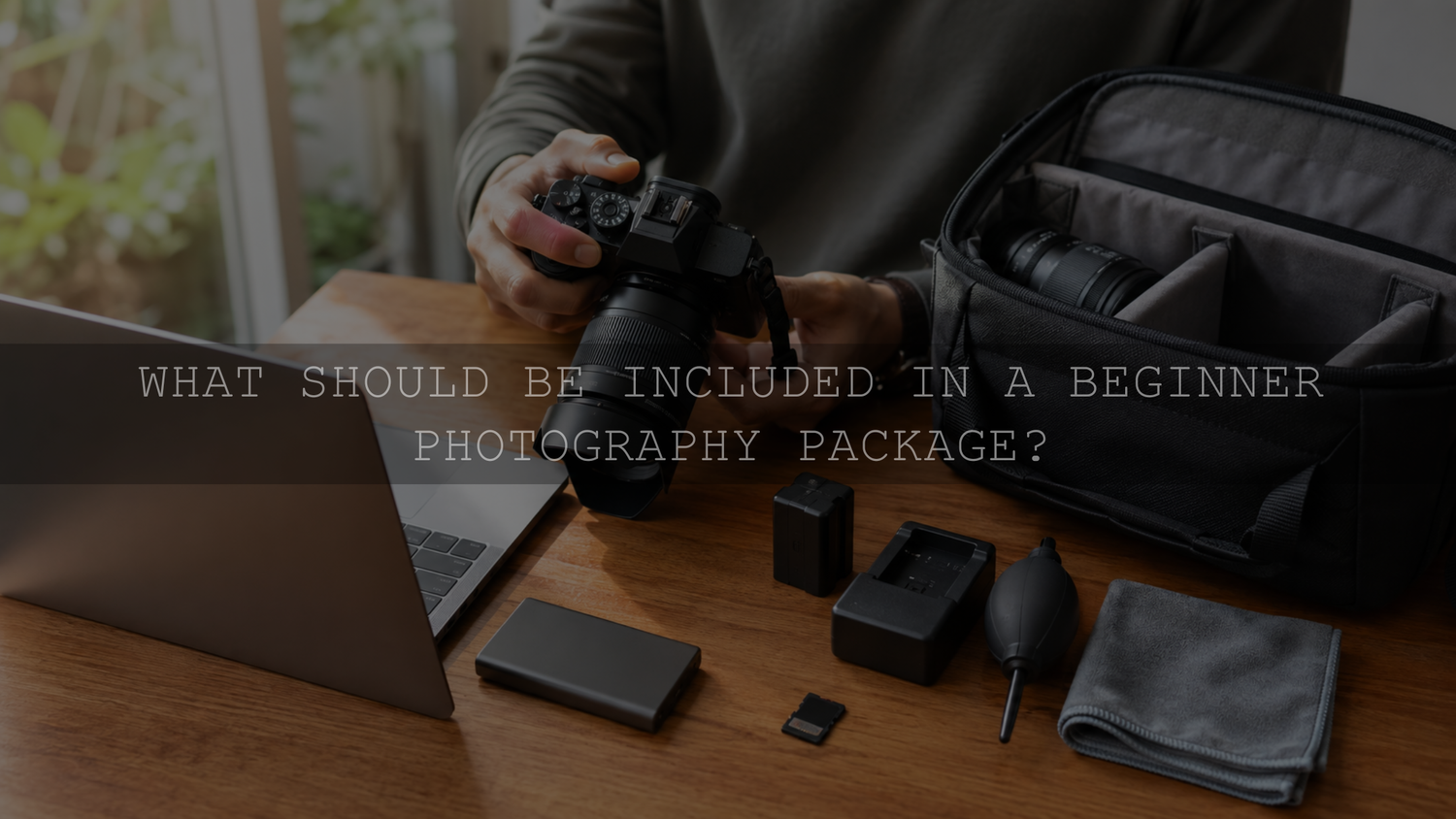
A beginner photography package should include a reliable camera body, one useful everyday lens, a compatible memory card, a spare battery or reliable charging setup, a protective bag, basic cleaning tools and only the accessories you will actually use. A strong first kit helps you start shooting, learn exposure, protect your files and build an editing workflow without paying for filler gear.
If you are buying your first camera kit, focus on practical value instead of bundle size. A smaller package with dependable essentials can be better value than a large bundle padded with weak tripods, low-quality filters and accessories you may replace quickly.
What a Beginner Photography Package Should Include
A good first camera package should make it easy to go from unboxing to shooting without forcing you to solve every gear decision at once. At minimum, look for these core pieces:
- Camera body: A beginner-friendly mirrorless camera or DSLR with manual exposure controls, dependable autofocus and controls and menus you can learn comfortably.
- Everyday lens: A kit zoom suited to the camera system, such as a 16-50mm, 18-55mm or another comparable everyday range.
- Memory card: A compatible card, often SD depending on the camera, from a reputable brand and with enough speed for the photo and video modes you plan to use.
- Battery and charger: A compatible battery and reliable charging method. A spare battery is helpful for travel, events, long sessions and frequent video use.
- Protective bag: A padded camera bag or insert that keeps the camera, lens and accessories secure.
- Basic care tools: A clean microfiber cloth suitable for optics and a plain air blower for loose dust.
- File-backup plan: A computer plus another storage location, such as an external drive or cloud backup, for copying your photographs after a shoot.
Everything else should earn its place. A tripod, second lens, strap upgrade or software bonus can be useful, but only when it matches how you plan to shoot.
Start With the Camera Body, Not the Accessory Count
The camera body is the foundation of the package. For beginners, useful features usually matter more than chasing extreme specifications. Look for a camera that feels comfortable in your hands, provides reliable autofocus, supports manual exposure, works with lenses you can afford later and records file formats supported by your editing software.
A crop-sensor camera can be a sensible first choice because many systems offer relatively affordable bodies and lenses. Full frame can be useful for particular needs, but it is not required for learning composition, light, shutter speed, aperture, ISO or basic editing.
If you are comparing a new camera package with a used or refurbished kit, check the return policy, battery condition, lens condition, included charger, memory-card type and whether the appropriate lens and body caps are included. Test autofocus, buttons, dials and card writing when possible, and inspect the lens for obvious scratches, haze, fungus or physical damage.
Choose One Useful Lens Before Buying More
Most beginner photography packages include a kit lens. That may sound basic, but an everyday kit zoom is often exactly what a new photographer needs. It lets you practice wide scenes, everyday portraits, travel details, family moments and simple product shots without changing lenses constantly.
A kit lens does not need to be your final lens. After you have used it regularly, your photographs can show you what you actually need next. If you repeatedly work at the long end of the zoom, a longer lens or suitable prime may make sense. If you photograph interiors or landscapes, a wider lens may help. If you photograph food, products or jewelry, close-focusing ability may matter more than a longer zoom range.
Avoid paying extra for a two-lens bundle unless the second lens fits your real use. A telephoto zoom can be useful for sports, wildlife and distant subjects, but it may spend most of its time in the bag if those are not subjects you photograph.
Memory Cards: Buy for Reliability, Not Just Capacity
A memory card may hold the only copy of your photographs until you create a backup, so compatibility and reliability matter. If your camera uses SD cards, the SD Association explains that Speed Class, UHS Speed Class and Video Speed Class markings indicate minimum sequential write performance under defined conditions. This is particularly relevant when a camera requires sustained write performance for video or continuous recording. SD Association speed class guidance
Capacity depends on your camera resolution, whether you shoot RAW or JPEG, burst use and video settings. For many beginners, a 64GB or 128GB card is a practical starting point, but check your camera's estimated capacity and recording requirements. If you plan to record 4K video, follow the card specification in the camera manual rather than assuming every card included in a bundle is fast enough.
Splitting an important trip or event across more than one card can limit how much work is affected if one card is lost or fails, but multiple cards are not a substitute for a backup. After shooting, copy important files to your computer and at least one additional storage location before formatting the card.
Batteries and Charging Matter More Than Cheap Extras
A spare battery is often more useful than small bundle fillers. Battery life varies by camera model and shooting conditions, and frequent video recording, display use, wireless features and cold temperatures can reduce available operating time.
Check whether the package includes the camera manufacturer's battery, a third-party battery or both. Third-party batteries may work, but compatibility varies by camera and some models can display compatibility warnings or may not report battery information normally. Check the camera manufacturer's guidance before relying on a third-party battery for an important shoot. If the bundle includes a charger, make sure it matches the battery model and the power setup you will use.
Camera Bag, Strap and Protection
A beginner camera bag does not need to be expensive, but it should protect the camera better than carrying loose equipment in a general-purpose bag. Look for padding, adjustable dividers, secure closures and enough room for the body, one or two lenses, batteries, cards and a cleaning cloth.
A strap is also worth checking. The standard strap included with a camera may be adequate, while a padded neck strap, wrist strap or sling can make particular shooting styles more comfortable. Do not overbuy here. Secure attachment and comfort matter more than having several different straps.
Cleaning Tools: Useful, but Keep Them Simple
A clean microfiber cloth suitable for optics and a plain air blower cover most basic beginner cleaning needs. Remove loose dust before wiping a lens surface, and avoid rough tissues, household cloths or cleaning liquids that are not intended for camera optics.
Be cautious with image-sensor cleaning. Camera manufacturers provide model-specific cleaning procedures because the sensor area is delicate. Use your camera's built-in sensor-cleaning function when available and follow the manufacturer's manual before using a blower or attempting direct cleaning. If recurring spots remain and you are unsure how to proceed, a manufacturer-authorized service provider or experienced camera service center is the safer option.
Tripods: Helpful When Stable, Frustrating When Cheap
A tripod can be useful for night photography, long exposures, self-portraits, family photos, flat lays, product photography and video. The problem is that some beginner bundles include lightweight tripods mainly to increase the accessory count.
Before treating a tripod as an important part of the package, check its rated payload, working height, leg stability, head movement and quick-release system. If the bundled tripod does not feel stable with the camera and lens attached, treat it as a bonus rather than a reason to choose the package.
Software and Learning Resources
Some beginner photography packages include software trials, online courses or editing bonuses. These can be helpful, but they should not compensate for weak core equipment. Before valuing a software trial as part of the package price, check what happens when the trial ends and whether continued access requires payment.
If you choose Adobe Lightroom for editing, its preset system can provide reusable starting points for different looks. Adobe describes Lightroom presets as predefined settings that can apply adjustments including exposure, contrast, saturation and color grading. Adobe Lightroom preset guide
Adobe's Lightroom documentation also explains that presets and profiles can be imported in Lightroom desktop through File > Import Profiles & Presets. Adobe guide to installing presets and profiles
After you begin shooting regularly, editing becomes another part of the photographic workflow. A preset can provide a consistent starting point, but it should not replace basic corrections. Exposure, white balance, skin tones, highlights and shadows may still need individual adjustment after a preset is applied. If you want to understand why RAW files generally provide more editing flexibility than camera JPEGs, read the AAAPresets guide to RAW vs JPEG editing workflow.
Bundle Extras That Are Often Not Worth Paying For
Some camera bundles look impressive because every small accessory is counted separately. Be cautious when the accessory count becomes the main selling point. Extras that deserve closer inspection include:
- Low-cost screw-on lens converters with unclear optical quality.
- Effect or colored filters that you did not already plan to use.
- Unknown-quality card readers with unclear specifications.
- Mini tripods that are not stable enough for the included camera and lens.
- Extra bags or pouches that provide very little padding.
- Large cleaning kits containing liquids or tools you do not know how to use safely.
A useful way to compare packages is to ignore the total item count and compare the value of the core pieces separately: camera body, lens, battery, charger, memory card and bag. If those pieces fit your needs, the bundle may be worthwhile. Bonus accessories should not be used to disguise weak essentials.
Match the Package to What You Want to Photograph
The right beginner photography package depends on your first real subject. A travel beginner may value a light camera, practical zoom range, spare battery and comfortable bag. Someone photographing family moments may care more about dependable autofocus and a lens that works comfortably in common indoor and outdoor situations. A future portrait photographer may care more about lens-upgrade options. A product or small-business photographer may benefit from a tripod, consistent lighting and a repeatable editing workflow.
If your goal is to start a paid photography side business, do not spend your full budget on equipment before choosing the service you intend to offer. AAAPresets has a separate guide on how to start a photography business on a small budget, which is a more relevant next step when your camera-package decision is tied to future client work.
A Simple Beginner Photography Package Checklist
- Camera body with manual exposure controls and dependable basic autofocus.
- One everyday lens in clean working condition.
- A compatible memory card that meets the camera's speed and capacity requirements.
- A compatible battery and charger, plus a spare battery if your budget and shooting needs justify one.
- Padded camera bag or protective insert.
- Clean microfiber cloth suitable for optics and a plain air blower.
- Stable tripod only if you expect to shoot low light, products, self-portraits, long exposures or video.
- Clear return policy, warranty or seller protection.
- A backup plan for photographs after they leave the memory card.
- An editing and organization plan for your files after each shoot.
Where AAAPresets Fits Into a Beginner Workflow
A camera package helps you capture the photograph. Editing helps you shape the final look. Once you are comfortable importing and adjusting your images, the Lightroom Presets for Lightroom Mobile & Desktop collection provides adjustable starting points across a range of photography styles.
Use presets as a starting point rather than a replacement for editing judgment. Apply a look, then check exposure, white balance, skin tones, highlights and shadows for the individual photograph. AAAPresets presets can be useful when you want several style options while learning how different lighting and source files affect an edit. The current AAAPresets offer is Buy 3, Get 9 FREE when you add 12 eligible items to your cart.
FAQ
Is a kit lens enough for beginner photography?
Yes. A kit lens is generally enough to learn framing, exposure, focus and basic editing. Consider upgrading after you understand which subjects you photograph most and which specific limitation of the kit lens is getting in your way.
Should I buy a camera bundle or separate items?
Choose the bundle when the camera, lens, battery, card and bag are genuinely useful and the total price compares well with buying those essentials separately. Buy separate items when the bundle's apparent value depends mainly on accessories you do not need.
Do I need Lightroom presets as a beginner?
No. You do not need presets to learn photography. They can, however, help you explore editing styles or establish a repeatable starting point. They work best when you still review exposure, white balance and color for each photograph after applying the preset.
What is a common beginner camera package mistake?
A common mistake is choosing the package with the largest accessory count instead of comparing the quality and usefulness of the essentials. A reliable body, appropriate lens, compatible memory card, dependable power and protective bag matter more than a long list of extras you may never use.
The right beginner photography package should remove friction rather than create more decisions. Start with dependable essentials, learn what you enjoy photographing, back up your files and build your editing workflow gradually. A useful first kit is one you will actually carry, practice with and understand.
Written by Asanka — creator of AAAPresets, serving more than 10,000 customers.



Leave a comment
This site is protected by hCaptcha and the hCaptcha Privacy Policy and Terms of Service apply.